Why A YouTube-First Content Strategy Is Shockingly Simple for Business Growth
Feb 17, 2026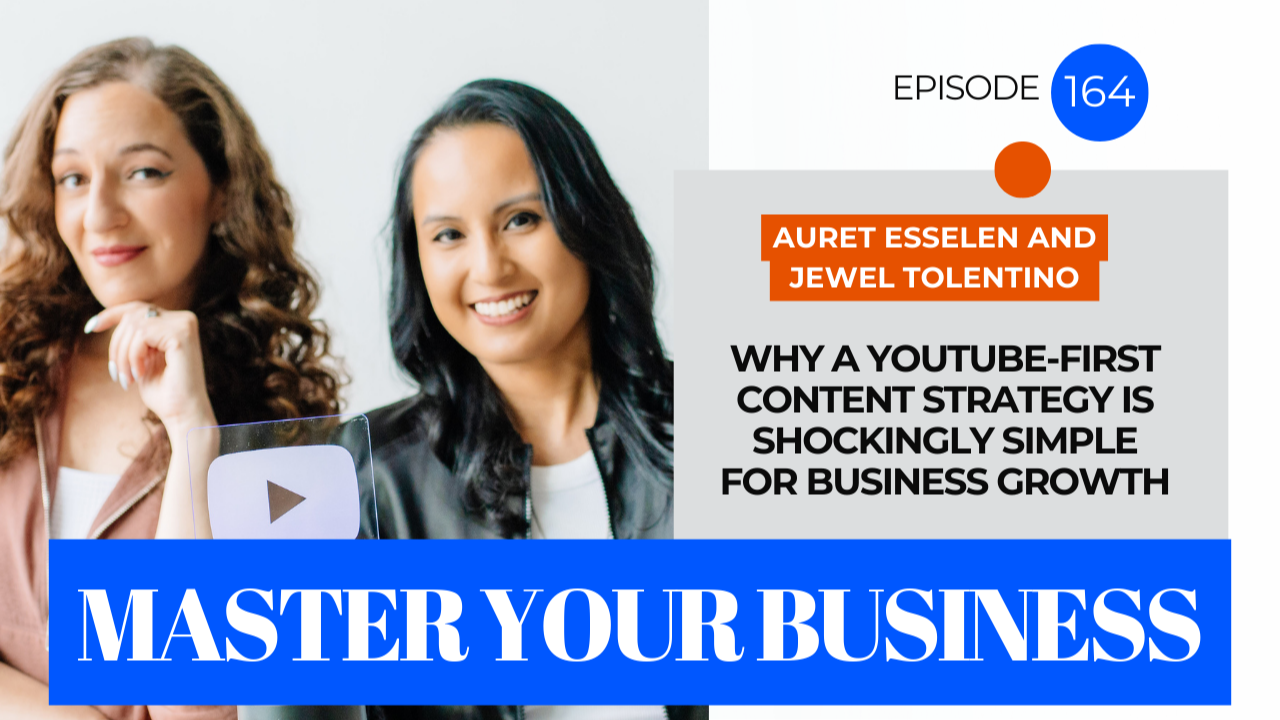
The anti-viral approach to YouTube that builds long-term authority and predictable client growth.
Key Takeaways
- Pick YouTube topics by reversing from your offer, not by chasing views.
- Batch five videos at a time so consistency stops depending on your mood.
- Give away the “gold” on video, people buy proximity, clarity, and guidance.
- Keep your setup stupid simple, remove friction, publish more.
- Titles and thumbnails win clicks, test them, then let retention do the work.
“If you don’t have the video, then you don’t have a YouTube channel.”
“Success isn’t measured by tons of views. It’s measured by how close you are to your goal.”
- Essetino Media
If your business growth depends on you posting today to get paid tomorrow, you’re not building a strategy. You’re feeding a content machine. And it eats time. This is your sign it’s time for a reset.
I sat down with Auret Esselen and Jewel Tolentino, YouTube for Business Strategists and co-founders of Essetino Media. Their channel has generated multiple six figures. Their team supports a portfolio of 7 and 8 figure brands. Their signature Anti Viral Strategy is built for experts who want clients, not clout.
“The best YouTube strategy in 2026 is not about going viral. It is about building trust that compounds.”
We talked about what actually works when you’re an expert, not an entertainer. How to choose topics that attract the right buyer. How to batch content without burning out. How to publish in a way that gets clicks and builds authority over time.
Why YouTube-First Works When Social Feels Like a Treadmill
Most platforms reward what you did this morning. YouTube rewards what you created last year. Auret nails the difference in the episode. Instagram stories disappear in a day. Posts get a couple of days. A YouTube video can keep getting views and leads for years if the topic stays relevant.
“With a YouTube video, it’s the only one that can literally last for years and years.”
That is why YouTube-first is not a content decision. It is a business decision. You’re building an asset library that compounds trust, while you do client work, deliver projects, or take a day off without guilt.
If you want the platform proof, YouTube even offers native testing for thumbnails so creators can compare performance over time. That’s a sign of where the platform is headed, more measurement, more compounding, less frantic posting.
The Anti Viral Strategy: Build Trust, Not Trends
The phrase “anti viral” matters. It’s a filter. You don’t need to become a character. You don’t need to box yourself into a niche you’ll hate in six months. You don’t need to chase whatever the algorithm is rewarding this week.
Jewel shared something I’ve seen too. People build channels that grow fast, then burn out because they can’t stand the persona they created.
“They box themselves into a niche that they didn’t wanna talk about every single week.”
Anti viral means you build a channel that fits your business and your nervous system. You publish consistently. You teach clearly. You stay yourself. Your audience learns how you think. That is what sells high ticket services in a crowded market.
Choose Topics That Attract Buyers, Not Browsers
This is where most people screw it up. They pick topics based on what might get views. Auret and Jewel reverse it. Start with what you want the channel to do: Generate leads, grow your email list, sign up for your program or book your services…. Then work backwards.
“Success isn’t measured by tons of views. It’s measured by how close you are to your goal.”
Here are topic lanes from the episode that work for expert businesses:
- Frequently asked questions your ideal client already asks
- Your frameworks and IP, the way you solve problems
- Thought leadership on what’s changing in your industry
- Chapter style content if you have a book, one video per chapter
- Industry specific packaging, “for HR leaders,” “for cybersecurity consultants,” “for executive coaches”
Auret also made an important point about language. YouTube is a search engine. So your titles should sound like how your client searches, not how you would explain it to a peer. So stick to those topics and headings if you want to get clients from YouTube as a consultant.
How Deep Should You Go Without Giving Away Everything
Experts love this objection. “If I teach it, nobody will pay me.” Jewel crushed this myth in the episode. The more you give, the more people trust you, and the more they want proximity.
“The more you give, the more people will want to buy.”
Auret added the 2026 twist. Information has become cheap. People can ask AI. They can read summaries. They can watch a competitor. They pay for what AI can’t deliver. Guidance, context, accountability, lived experience, and decision support.
“It’s not about the information and holding back the information.”
So go deep. Teach the what and the how. Let your paid work be the implementation, feedback, and structure that gets results faster.
Script or No Script: The Only Answer That Matters
This is refreshingly practical. Some people read a script and look frozen. Others wing it and ramble. There is no universal rule. The rule is… what lets you show up consistently and communicate clearly. That’s the best rule to follow!
“There is no right answer. It really depends on the person.”
If you need a starting point, try this:
- If you tend to ramble, write a tighter outline or light script
- If you sound robotic, use bullet points
- If you freeze, speak to one real client question like the person is in the room
- Aim for a clear beginning, middle, and end
You’re building a speaking muscle. It improves with reps.
The Sustainable Workflow: Batch Five Videos Before You Launch
Auret and Jewel recommend batching, which means, plan a group of videos, film them, edit and schedule them in one go. Do not force yourself onto a weekly production hamster wheel.
“Get to your first five videos… before you launch.”
Five videos typically covers a month. It buys you breathing room. It protects you when travel happens, kids get sick, client work spikes, or your brain decides it hates you that week.
If you want an implementation checklist, use this:
- Pick five topics tied to your offer
- Decide bullet points or script
- Block a filming session, two to three hours
- Film easiest first to build momentum
- Edit or outsource the editing
- Schedule uploads with title, description, thumbnail
Tech Setup: Remove Resistance, Publish More
Gear is where even established experts procrastinate. They go all out and get the new mic, lights and camera. But they never take action.
They were blunt about this. Start with what you have. Phone. Webcam. Simple USB mic. And use natural light from a window.
“Remove the barrier. Film with what you have.”
They mentioned practical tools like a plug and play webcam and mic, plus simple phone audio options. Upgrade in stages after you’ve earned it through consistency.
Here’s my current set up.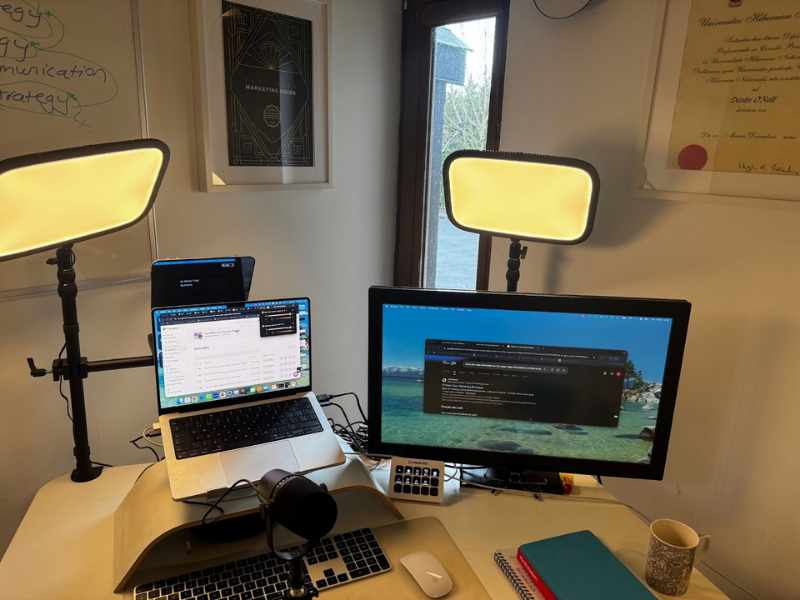
Titles and Thumbnails: The Two Levers You Can Control
Publishing is not just hitting a button when you’ve finished recording. It’s packaging up that video so people are more likely to search, click and watch it.
Auret recommends keeping thumbnail text short to just a few words. Also, using high contrast imagery that has a clear focal point helps to spark curiosity. Then build titles that balance search and uniqueness.
They also referenced keyword research using TubeBuddy for search-led topics.
Here are some that got their seal of approval!
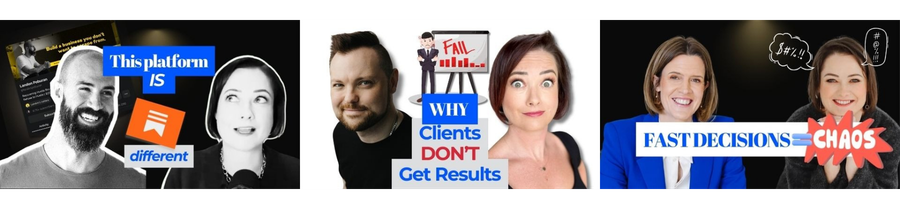
And yes, YouTube has a native feature to compare up to three thumbnails. Use it when you can. (Reference: YouTube Help, Test and compare thumbnails.)
Frequently Asked Questions
Can I use YouTube if I hate being on camera?
Yes, but your fastest trust wins come from seeing and hearing you, start simple and build confidence with reps.
How long should my YouTube videos be?
Long enough to answer the question clearly, short enough to keep attention, clarity beats length.
Should I script my YouTube videos?
Only if you can sound natural, otherwise use bullet points and a clear structure.
Do I need expensive equipment to start?
No, a phone or webcam plus decent audio and light is enough to publish consistently.
How do I choose YouTube topics that get clients?
Reverse engineer from your offer, then create videos that answer the questions your buyers search.
Is it smart to post podcast episodes on YouTube?
Yes, but title them for the topic, not “Episode 17 with John Smith,” and mix in solo videos that showcase your expertise.
Does YouTube still work if I don’t go viral?
Yes, the entire strategy here is built on compounding trust without viral spikes.
Conclusion
If you take one thing from this chat with Jewel and Auret, let it be this. YouTube is not a platform you feed. It’s a library you build.
Essetino media’s approach is simple on purpose. Align the channel with your business goals. Create topics your buyers search. Batch production so you stay consistent. Package with clear titles and thumbnails. Give away the gold. Let trust compound.
Now go do the first step. Pick one client question you answer all the time. Record a video answering it. Package and publish it.
Then listen to the full episode if you want the complete conversation, the nuance, and the tactical examples straight from Auret and Jewel.
Tools & Resources Mentioned
- YouTube Test and Compare Thumbnails - Native feature to compare up to three thumbnails and pick the winner.
- TubeBuddy Keyword Explorer - Keyword research tool to assess search volume and competition for YouTube topics.
- Canva - Used to design thumbnails quickly, with templates that you should customize.
- Logitech Brio - Plug and play webcam option mentioned for simple filming.
- Hollyland wireless mic - Suggested phone audio setup for clean, portable sound.
- DJI Mic - Another wireless mic option mentioned in the episode.
- Substack - Used to repurpose transcripts into posts.
- Zoom - Mentioned as a possible recording tool.
Related Articles
- How to Overcome the Fear of Doing Videos and Show Up Confidently
- How to Write a Brand Message That Attracts High Paying Clients
- How to Build a Scalable Offer Without Burning Out
- The Simple Sales Strategy Coaches Need Right Now
- How To Plan A Month's Worth Of LinkedIn Posts In One Day
- LinkedIn Strategy 2026: Turning Visibility Into Clients
Connect With Jewel & Auret
⇨ Website: https://essetinomedia.com
⇨ Youtube: https://www.youtube.com/@essetinomedia
⇨ Auret’s LinkedIn: https://www.linkedin.com/in/auretesselen/
⇨ Jewel’s Instagram: https://www.instagram.com/jewel3tolentino/
Connect with the Host — Deirdre Martin
🌐 deirdremartin.ie
📱 LinkedIn
🧠 Work With Deirdre: Book a call → https://calendly.com/deirdremartincx/first-business-soiree-instagram
About Essetino Media
Auret Esselen and Jewel Tolentino are YouTube for Business Strategists and Co-Founders of Essetino Media. They help experts and thought leaders turn YouTube into a trust-building engine that attracts clients and amplifies authority. With their own channel generating multiple six figures in revenue and their team managing a portfolio of 7- and 8-figure brands, Auret & Jewel’s signature Anti-Viral Strategy transforms YouTube from a content platform into a legacy-building, revenue-generating asset.
Watch or Listen to the Full Episode
Apple Podcasts → https://podcasts.apple.com/us/podcast/the-master-your-business-podcast/id1667327376
YouTube → https://youtube.com/@deirdremartinmyb?si=haAZF5yY4X8pYSbN
Full Transcript
[00:00:00]
[00:00:00] Why going viral is not a strategy
[00:00:00] Deirdre Martin: Confession incoming, and not just mine neither. Because if I asked you to list every single platform that you should be on right now, you'd probably need a stiff drink and a lie down, am I right? Because I know the content advice out there is basically post more, show up, more, engage more, and I'm like, oh, with what time?
And my nervous system is just not able for that anymore, right? And yeah, I maybe did it when I was in month one of my business, but after that, between client delivery and all the other different hats, it's just not possible. And here's the thing that I've learned is that most entrepreneurs don't have a content problem.
They have a sustainability problem, and that's why today's episode is going to help with that because we're talking about YouTube not as another place to post, but as the place where you build assets that keep working when you are [00:01:00] not. I'm Deirdre Martin, and you're listening to The Master Your Business Podcast, and today I'm joined by Auret Esselen and Jewel Tolentino YouTube for business strategists and co-founders of Essetino Media. They help experts and thought leaders turn YouTube into a trust building engine that attracts clients and amplifies authority. And Folks, oh my gosh. These two don't just teach it. They've actually lived it.
Their own channel has generated multiple six figures, and their team manages a portfolio of seven and eight figure brands, plus they've got a signature framework. The antiviral strategy. Cool name right, and that turns YouTube from a content platform into a legacy building, revenue generating asset. In today's conversation, we're gonna go straight for the meaty bits.
Why YouTube first beats social first when you want buyers, not browsers. How one video can become an entire content [00:02:00] system, so I'm talking shorts, emails, captions, even podcast, audio. Watch this space, how to pick topics that pull in the right people without chasing views for ego's sake. And the truth is, if you want to trust at scale, video actually does a serious amount of the heavy lifting.
So by the end of this episode, you're gonna know exactly how to build a YouTube strategy that supports your business without turning you into a fricking content hamster wheel. All right, let's go.
Oh my gosh. Auret, Jewel, it's so great to see you again. Welcome to the Master Your Business podcast.
[00:02:38] Jewel Tolentino: Thank you. Thank you so much, Deirdre. Thanks for having us.
[00:02:42] Deirdre Martin: Oh, I'm like you guys. I feel like you're half Irish because we have been talking so much about Ireland and you have these Irish connections and it was so amazing meeting you both in Vancouver.
I'm so happy we've stayed in touch and I'm super excited to talk to you today about all things [00:03:00] YouTube. Mm-hmm.
[00:03:00] What YouTube first actually means
[00:03:07] Deirdre Martin: So to begin with, let's just start with YouTube first strategy. I'm just going straight for the meet. Why go YouTube first strategy?
[00:03:13] Auret Esselen: Yes, let's go. So with YouTube you have many different assets in a particular video, especially if you're spending time on.
Thinking about what is the strategy around my channel? What do I want my channel to do for you? And we have a very specific framework where we take people through the strategy piece. And that is really, you know, how is it aligning with your business goals? How is it attracting the person that you wanna attract, and what actions are you calling them to take?
And so when you infuse all of those things into your content strategy on YouTube, you have gold assets. So you have the full video, you can extract shorter clips from the video, which are highlights or like, you know, one-liners or, you know, quick things quick tips, that sort of things, which you [00:04:00] can use as Instagram reels and YouTube shorts.
[00:04:03] Jewel Tolentino: And even on Facebook as well, or even on TikTok,
[00:04:05] Auret Esselen: on LinkedIn too, on video is doing really well on LinkedIn as well. And then you also have the transcript, which you can again extract different material for captions on all of the different platforms. What we do as well is we write up an email that goes out to our list telling people to go watch the video.
So again, we're using the transcript for that, right? We're basically teasing what's in the video and telling people to go to watch it. And we also take that and put it on Substack. So it's really, you know, like this infinite content system that you can create from YouTube.
[00:04:39] Jewel Tolentino: And another thing with YouTube is out of all the social media platforms, YouTube is the one that lasts the longest in the quote unquote algorithms that we are all playing, right?
So when you do a. Instagram story, that's 24 hours. When you do an Instagram post, [00:05:00] maybe a couple of days a Facebook post, same thing. But with a YouTube video, it's the only one that can literally last for years and years, depending on what the subject is, what the topic is. But I haven't found that on any of the other social media platforms.
So that's why YouTube is number one top priority in creating content for that platform for our business.
[00:05:25] Auret Esselen: I just remember podcast too, forgot to mention podcasts. You can extract the audio as well from the video use as podcasts create audiograms for Instagram. So yeah, there's lots you can do.
[00:05:35] Deirdre Martin: There is so much you can do.
I didn't realize you could do half of that stuff on YouTube. And like where my brain instantly goes is, and I'm just emanating clients. Oh, but Deirdre, I don't want to do videos. I don't wanna do that stuff. So what do you say to people who are thinking that, or their brains are sabotaging their YouTube success because they're going, fuck no [00:06:00] video.
[00:06:01] Auret Esselen: Yeah, I mean, I think part of it is a lot of people trip themselves up over like the way that it looks, the way the video looks, that's just, I mean, this one piece of it. I know a lot of people don't like to watch themselves on videos too, right? Like, I don't go back. I'm a YouTuber and I teach YouTube, but I do not go back and watch my videos.
[00:06:22] Deirdre Martin: Can I just say I record podcast episodes? And I think if I've we're on episode 159, I think this is, no, I don't think I've listened to any more than one of these episodes back. So that's a thing.
[00:06:35] Auret Esselen: There you go. There you go. But they're helping people, right? Like you and we see that too, like with our videos.
Like I used to trip up so much about making sure that I communicate properly on video and am I saying things correctly in the right way? Does everything look okay? But at the end of the day, when you've done this over and over again, you'll start to see none of that matters. People will leave you comments, will love the video.
[00:07:00] They'll say how much you've helped 'em. And I mean, especially because I'm assuming most of you aren't like teaching videography or anything like that where people care about the quality and the way that it looks. And like polished blogs and stuff. Most of us are educational content creators, right?
So we love to share our expertise and for that it's more about, you know, you just sharing your wisdom and showing up to do that, using YouTube as a vehicle to practice that over and over again.
[00:07:33] How YouTube builds trust over years
[00:07:33] Jewel Tolentino: And I would say, you know, why video? Even though you're so scared and all that kind of stuff.
If you are an entrepreneur and you have a business, you need to be on video because, I mean, do you trust someone when you only hear them or when you see and hear them right? Or if you only see text from them? It's just an instant trust factor. We've seen it so many times [00:08:00] where, you know, people will watch our content.
We have no idea who they are, but they get on a call with us or they meet us in person at an event and they already feel like they know, like, and trust us. And I have no idea who they are and I haven't actually physically met them. So videos can do the selling for you. You know, I assume that we all have products and services that we're wanting to sell, get leads and all that kind of stuff.
And video is one of the top ways to do that. And yes, it's scary. Yes, you'll be bad in the beginning. Yes, you'll make mistakes. Yes, there will be people that will make fun of you, but it's part of the game. We just have to know you're in the entrepreneurial game. You're in the let's, we gotta make money and sell our services game.
So this is one of those pieces that I feel is required for an entrepreneur in a business.
[00:08:53] Deirdre Martin: That makes so much sense, all of that. And I'm so coming around to the idea of YouTube first after [00:09:00] talking to the two of you, and I think that's definitely gonna form part of my strategy in 2026.
This is December. By the way, folks, if you're listening, when we record this December, 2025 and watch out for YouTube for a strategy for me, and we're only a few minutes into the conversation but tell me in terms of content, right?
[00:09:21] Why experts attract views but not clients
[00:09:30] Deirdre Martin: So I'm gonna assume rightly or wrongly that most people listening are creating some form of content right now that they're out there in some way for videos.
Where do you start with the topics and content strategy for YouTube?
[00:09:37] Auret Esselen: Mm-hmm. So it really comes down to what do you want the channel to do for you, do you want to get leads from it? Do you want people to subscribe to your email list? Do you wanna sell a particular product? I'll just use an example.
Most of the clients that we work with, they have some sort of program or offer that they wanna lead people to, but that offer might be quite like a high ticket program. So [00:10:00] what we end up doing is, I mean, it's not to say that you can't sell high ticket directly from a YouTube video. It's happened. We had a client who, she had less than a hundred views on her video, less than a thousand subscribers at the time, but she sold $10,000 product into her mentorship program.
They watched a video and just enrolled right away. And it wasn't even a hard selling promo video either. It was just her sharing her knowledge with a casual call to action to check it out. So when it comes to what's the point of you creating these videos and of your channel?
That's when we start to look at like reverse engineering that, okay, so what types of topics can we speak to that will attract the right person that you want for that offer? And you gotta know that it's not about, you know, getting tons of views or attracting a broad audience. Success isn't measured by tons of views.
It's measured by how close you are to your goal. Are you selling that project that you want it to sell? Right? [00:11:00] And that's why we always say like, don't pay attention to the number of views on your video. It's the right to viewers that you want. So once you have a content strategy that aligns with attracting that person, and typically that looks like, you know, you can create content around your ip, your frameworks, you teaching the hot topics in your area, you know, the frequently asked questions that your ideal person would be asking. Even sharing your thought leadership and speaking to different industry news or certain things that are going on in your space that you have thoughts on.
And people wanna hear those thoughts. So those are a couple of ideas.
[00:11:43] Jewel Tolentino: Yeah. And it, let's say you have a book, you're an author. I would do a video on each chapter that you have in your book. And Auret already mentioned this, but frequently asked questions because mm-hmm. That is not only, okay, people are frequently asking these [00:12:00] questions, but.
You can actually send the video to your potential lead or client that is asking that question so you don't have to repeatedly answer the same frequently asked questions. That's what we do is like whenever we had a question from a client like that was always coming in at the same time, we would create a video on it and then send that to our potential lead and.
The video would do the selling for us. You know, we wouldn't have to type out the same thing or even say the same thing. We're like, just watch this video. And it's a way to duplicate yourself. So that, that I would say is one that I would start off first is what are the frequently asked questions that you get?
And create those as separate videos. Yeah. Don't put them all in one. 'cause I know a lot of people like to bunch up everything. We love creating very, like, segmented videos.
That address one question or one topic. [00:13:00]
[00:13:00] Auret Esselen: Yeah. And when you think about it, YouTube is a search engine. So you gotta think of it from the space of what would my ideal person be typing into the search that this video would be a perfect fit in answering that question.
Because the way that they would ask the question or the way that they would search for the topic might be different than the way that you're communicating it. So it's important to think of the language that they use. And you know, someone might say, well, there's already tons of videos out there answering the question.
You know, how do I stand out? And the fact of the matter is that just by you being yourself in the video, that does make the content different. 'cause you're gonna explain things differently and you're gonna bring different experiences, different stories to that video. So that's gonna make it different.
And at the same time, you can also package the video in a way. When I say package, I'm referring to like the thumbnail and the title. Mainly you can state outright [00:14:00] in the title or the thumbnail, who that video is for. So if a ton of people in your space, let's say you're a life coach, for example. And if a ton of people in your space are talking about like how to balance your work life and your personal life, right?
Let's say that's a hot question in your space, but you specifically work with, let's say, seven figure business owners or with people in the wellness industry or what have you mention that in the title, how to balance work life or your work your business life with your personal life for wellness industry business owners, or something like that.
You know? So that way immediately you're standing out and you're, again, you are not worried about the fact that you're gonna get less views on that video because it'll be the right person watching that video for you.
[00:14:53] Deirdre Martin: Oh, there's loads in that. And so many takeaways. I'm like, okay, where do we go back to start with this?
[00:14:59] Giving away the gold and increasing sales
[00:14:59] Deirdre Martin: So [00:15:00] with the content, then we now know how to find the topics. How deep do you go? So to your point, jewel, if somebody has written a book, and let's assume there's 20 chapters in a book, like, do they give away everything that's in the book and all the things that they do beyond like, how deep do you go or do you need to go on YouTube?
[00:15:21] Jewel Tolentino: So, that's a good question because a lot of people who sell products and services, they're like, well, I don't wanna give the gold away because I want them to pay for the gold. Right. Here's the thing, the more you give, the more people will want to buy. Because if you hold everything, you hold all the information.
I don't wanna tell it, then people don't actually even know your brilliance and they don't actually know that you are the one to solve the problem. A really good example of this is Alex Hermozi. Most people know Alex Hermozi. He holds nothing back and he just goes all in. And what happens when he offers something, when he [00:16:00] has a book or you know, you wanna apply to work with him?
Everybody wants to work with him and does, he breaks
[00:16:04] Auret Esselen: the internet,
[00:16:05] Jewel Tolentino: he does nothing but give. Same with Gary V. If you just look at all the people in the space, they do nothing but give in detail, in great detail. And they, like, there are people that will never work with Alex Hermozi, but will become so successful just off of his, you know, $30 book or all the free stuff he gives away.
He talks about the law of reciprocity a lot. So he's like, the more that you give, the more that people feel the need to reciprocate and want to pay for services. And a lot of them will think if he is giving this much for free, imagine if I bought the book or if I hired him, or, you know, all that kind of stuff.
And the same goes for you as well. We hold nothing back in our YouTube videos. Like I'll tell you all the tactics in the videos, they are all in different order. But if you want, you know, like [00:17:00] one-on-one guidance or you want us to do it for you, then that's when you would pay to hire us. And a lot of our how-to tutorials are telling the person Exactly, this is how you do it.
And then at the end we'll say something like, oh, well, if you wanna work with us directly, here's our offer. Right. And head down to the description below. And there are people that will still want to do that, even though I've literally just told them exactly how to do the thing that they're paying me to like to get a session with basically.
So don't hold all your eggs in one basket. Don't hold the gold, the more gold that you spread out, honestly. Like, that's when people want to pay and wanna work with you.
[00:17:41] Auret Esselen: I think too, just to add to that we're moving away from like we're past an era of paying for information because with chat GPT, with AI and everything.
People can find out a lot just by typing into ai. Right? So it's not about the information [00:18:00] and holding back the information. They'll go to someone else and get that information or chat, GPT, right? It's about you showing up and sharing your knowledge also, but your experiences, your stories, like that is the piece that can't be replicated, that AI doesn't necessarily know.
Right? They can't make things up like that. And people will end up working with you. Not for the information, but because of, you know, you're, maybe you're providing a service. They need the accountability, they want the one-on-one guidance.
[00:18:31] Jewel Tolentino: Your energy, your personality. They like the way you explain something.
Yeah.
Like, 'cause AI's gonna wipe off like courses and all that kind of stuff there. You can find everything online now, but it's like, I wanna work with you 'cause I really like your energy, your personality, your group, your container. Like that's the stuff that's gonna be more important now.
[00:18:54] Deirdre Martin: Yes, yes, yes, yes to all of that.
That's all I can say. I totally agree. And having been a [00:19:00] StoryBrand certified coach for the last four years, we're taught the same in StoryBrand. But you can go and read the book, building a StoryBrand and it tells you how to do it. Right. But I still went and paid thousands and pay thousand to remain certified and to have access to the training and all of the things because it's the proximity as well.
Right. Which is another psychological thing. So yeah, it makes total sense. Give away the family farm folks. And the example, I talk about this all the time too, so I'm so glad to hear you're on the same side of the fence as me with this. But it's like, you know, I blow dry my own hair every day, but. When I'm going to a wedding or to an event, I will go to the salon to get my hair blow dry because it's just that bit better than I can do myself.
And the other thing is, and I say this with copy and creation and service providers, because when I asked a client for feedback one time, this is what she said to me, A fabulous Canadian lady, by the way. I asked her why did she hire me to help her with her story? And she said, [00:20:00] because when you're on the inside of the label, you can't see what's on the outside of the jar.
Mm-hmm. Oh, I'm gonna, I'm gonna share that a lot. And I do. Yeah.
[00:20:13] Jewel Tolentino: And that's so true. So, so true.
[00:20:16] Deirdre Martin: Right. Okay, so let's talk really practical stuff now in terms of. Okay, I have my topic. I'm going all in on YouTube. What do I need next? Is it the tech? Do I need scripts? Do I need, you know, fancy microphones? And you mentioned about titles, thumbnails.
Tell us all of the things that we need. Start to finish. Let's go.
[00:20:44] Jewel Tolentino: I'll touch upon the scripts or no scripts.
I actually did a YouTube video on this, and it's a topic that people always ask about, should I write a script?
Should I not write a script?
[00:20:55] Auret Esselen: Yeah.
[00:20:55] Jewel Tolentino: And if the video is titled to script or not to script, you know, like Shakespeare, [00:21:00] right? And the answer is there is no right answer. It really depends on the person, because. There are some people who will get a script and they look like a deer in the headlights and it's not working for them.
And they work best with bullet points and they free flow. And then there's other way around where a person doesn't have a script and they're just going all over the place and they can't get their thoughts straight. And it's just like, oh, going with that, you know, we need a beginning, middle, and end here.
So there's no right or wrong answer. It's what works for you and I would suggest that you try it out. I tried out scripts. They do not work for me. I cannot do scripts for the life of me. I come off too robotic. I need the free flow of you know, the speaking and all that kind of stuff. So I prefer no scripts, but we have clients that do very well with scripts and they look like they're not even scripting, but they're reading every single word on the teleprompter.
So [00:22:00] I would say do scripts if you can make it seem like you're not doing scripts. And if not, then I would do bullet points and do a free flow. And yes, it's a muscle that you need to work to be able to speak coherently. So that's my take on scripts. Yeah, there's who
[00:22:16] Deirdre Martin: script or not to script. You heard it here first.
[00:22:19] Jewel Tolentino: Yeah.
[00:22:19] Auret Esselen: Sometimes scripts for people like contains them too much and they're not able to actually be in the moment and show their personality. And we've had clients like that too. So we've like taken them off scripts 'cause they thought they have to do it. We're like no bullet points or even we'll prompt you with questions.
And it's so much better. It's, the content comes so much better and yeah. So you need to experiment. That's kind of the first step after, you know, the content themes and everything is the planning. Right?
[00:22:49] Batching content to avoid burnout
[00:22:49] Auret Esselen: And we always talk about batching these different steps. So batch planning your videos, then batch filming your videos, then editing them.
If you're not editing them, pass 'em off to someone who [00:23:00] will. Then the scheduling piece is where the thumbnails and the metadata, meaning like the title, the description, all that kind of stuff comes into play when you go to schedule your videos. So those are kind of the four categories of steps.
And for me, you know, in terms of, when I say batching, we always recommend doing more than one video at a time because the name of the game on YouTube is to stay ahead. It's a long game. You gotta stay like, ideally like five steps ahead of yourself, but as many steps ahead as you can so that you're never at a point where you've run outta videos.
Because life happens, things come up where we're not able to get it done. Right.
[00:23:41] Jewel Tolentino: Here's a practical step I have for the listeners is if you've heard all this and you're like, okay, I wanna start a YouTube channel. Get to your first five videos like in batches. So like Auret said, get your scripts or no scripts, bullet [00:24:00] points, right?
And then you film the five videos and then you have the five videos edited. Like get all that done first before you launch and release your videos. Because what happens is people go, okay, cool, I'm ready to start YouTube. Here we go. And they'll film a video, record it, edit it, and then do the thumbnail and SEO and then release it.
And that was so much work for them. And then the next week they gotta go and do it again and again and again. And it's the hamster wheel. And you are not able to get ahead because you've just done everything in a sequential order. Yes. But when you batch everything, it's actually saves you time because.
You'll have five videos ready to go already scheduled if you do the batch processing. And then you can go back and then start again. And the reason why we say five videos is because depending on the month, there's four to five weeks in a month. Mm-hmm. [00:25:00] So that'll take care of either a month and a week or a month itself.
And that gives the person typically enough time that isn't like, you know, just like trying to catch up and you're just tired. And that's how people end up stopping YouTube and giving up on YouTube. 'cause they're like, oh my God, I couldn't keep up with it every week. And it's like, yeah, because it's not sustainable if you do it that way every week.
We only record once every month or once every two months, depending on how many videos we record in that batch session. And right now, at the time of recording this video, we are a month ahead on our YouTube channels. And so. It just gives you a better peace of mind because things come up, you get sick, you're not feeling it, you gotta travel.
You just don't feel like filming videos. And there've been plenty of times like that, but you are still ahead because once you missed that first week and then the second week and you're like, oh, well I missed already a month. There's no point. It's [00:26:00] done. And then years go by and you're like, I started, but then I couldn't keep up.
And so that, that's really like the thing that people struggle with the most is. Staying in the game of YouTube.
[00:26:12] Deirdre Martin: I totally hear that. And I do the same with my podcast, by the way. So I batch record them, and we tend to do three at a time. And so I do guest podcasts and I try to get three guests lined up for the same day.
Mm-hmm. And then I do a separate day with three solo episodes. So it takes two full days nearly between all of the editing and all of the stuff, which is a lot because it comes out weekly and we try to stay six weeks ahead . But I can tell you there have been times where we've been just one week and then there's a scramble to catch up again, and it is hard.
So I totally relate to that advice and it's really, really smart advice. So definitely folks, if you're thinking about starting a podcast or YouTube, heed this one [00:27:00] because it's really valuable. Okay, so there's something else popped into my brain. I wanted to ask you about this piece as well, which was, in terms of planning and actually guest posting with YouTube, what's that like?
So if somebody decides, okay. Script, no script topic, all of the rest. And then what about guests on YouTube and video for that?
[00:27:22] Auret Esselen: Yeah. So you're talking maybe like in a guest interview format? Correct. So we used to do a lot of these. We actually used to do them as lives on our channel. So we would livestream a guest interview.
The reason why we chose to do it is because it creates more of like a community aspect where you have people in the audience asking questions and that sort of thing. So was we made it into an experience.
[00:27:44] Deirdre Martin: Do you do it live?
[00:27:46] Auret Esselen: We did, but we used to but used to do it live. Yeah.
Yeah. So that was a whole nother game. Yes. That's like next level. But I was just gonna say, you don't have to do that. You can set a specific [00:28:00] day, like, just like Deirdre is where you're inviting your guests to record. And I feel like sometimes, depending on the guest, that makes them more comfortable too, because if they're not used to video then, you know, they might slip up or what have you.
And it's easier to just cut those pieces out and you can reassure them that you know, that will be done. So you would film it, and then when it goes to, depending on whether you have an editor or not, again, you could do like a one, take two. It really just depends if you guys are both just on it, you don't have to do much editing at all.
But when you go to upload that video. Always make sure that you're, again, I'm referring to the packaging. So the title and the thumbnail is leading with the topic of what you were talking about in the interview and is not something like episode 17, you know, life coaching Advice interview
[00:28:56] Jewel Tolentino: with
[00:28:56] Auret Esselen: John Smith.
With John Smith, yeah, exactly like that.
[00:28:59] Jewel Tolentino: Right. [00:29:00] Which we do see a lot of on YouTube. It is, when people put their podcasts on YouTube, they'll typically title it like a file name. And it's totally different for YouTube. And, you know, guest interviewing can be great. There's pros and cons to it, for sure.
Mm-hmm. You know, I noticed that people, they want to do guest interviews in hopes of. Putting them as the go-to expert, but when you have a guest person that's highlighting the guest, so you need to understand that first, that you're highlighting the guest services, the guest book or whatever that they have.
And so I like what you do where you, excuse me, where you film a solo podcast. That's what I would suggest people do as well if you have a mainly podcast type show, is that you do solo videos as well to showcase your expertise and talent. Because when you watch the podcast where it's. The main [00:30:00] host and the guest, it's like, it's all about the guest.
Mm-hmm. And so just understanding that, 'cause a lot of podcasters don't understand that. They're like, oh, well, I'm trying to sell my service, but they just constantly only have guests and they're like, well, I'm trying to sell my service of X, Y, Z. And I'm like, well, we're only hearing the guest.
We're not really hearing you and your expertise. So that's something to think about when you're doing a guest type show. The way that we utilized guest appearances is if the guest really had something that our audience would love to know about, that's how we utilize it.
Also. It's a great rapport with the actual guests as well. Yes. You're showcasing them and it's a great way to do collaborations. And with YouTube lately they released a new feature where you can actually do a collaborate feature where the one video shows up on both channels and you both share [00:31:00] the views. There's one person that mainly owns the video, but you can actually share the analytics and share the views.
Not sure if you share the monetization part, if your channels are monetized, but that's so cool because what people had to do in the past was upload it on both separate channels, but now they are realizing that, oh, there's a lot of people doing collaborations, and so you can actually have the video show up on both channels at the same time, which is really cool.
So we haven't tried it yet, but I'm super excited to try that out.
[00:31:32] Deirdre Martin: So cool. And actually I've done that on LinkedIn, right? So there's a particular software that you can use to stream, live to LinkedIn. So I tried this with my podcast. So they were live, right? We recorded live and streamed live.
And there's an incredible episode with Adrian Swinscoe who's like. What's he called? The punk Rock of CX customer experience. He's pretty cool. And definitely an episode worth going to watch back. And we recorded [00:32:00] that live on LinkedIn, so both of us streamed live to our audiences at the same time on LinkedIn, which was amazing.
And we just used one simple tool to be able to do that. And at the same time, we were streaming to Facebook and YouTube and everywhere. I was like, this is cool. But, you know, because the podcast strategy that I use is where guests come on and then we start chatting, you know, we dive straight into the conversation and later I record the intro and outro.
I'm like, fuck, how am I gonna do this if we go live all the time? And then some people weren't comfortable with being live. So, it kind of fizzled out for me. But yeah. It's interesting to hear you chat through the fact that YouTube are now making that possible too.
That's cool. Okay, so let's get back to the. Strategic boring systems, stuff that people need to know in terms of actually doing the recording with their topics, solo or guests, scripted or not, and then what do they need next? [00:33:00]
[00:33:00] Auret Esselen: Yeah. So you gotta set a date with yourself that you're committing to, that you know you're not gonna keep pushing back and back and back, but this date is a filming date and it's with yourself and it's a commitment.
And I know how hard it is to, you know, slot something in, especially when you don't feel like doing it. And the thing is, you'll never really feel like doing it, to be honest, unless you really, really love being on camera and filming. But I find most people it's a heavy lifting task. But you gotta reframe it in a way where it's you showing up to serve the people that you wanna serve and it's getting you a step closer to your goals as well.
It's a practice as well in being you. It's a practice in you speaking. It's really, I see YouTube as like a personal growth vehicle, to be honest. 'cause you know, if you go back and look some of my first videos, which don't do that. You will see how different [00:34:00] I am in terms of like speaking to camera.
But anyways, you gotta set, you gotta block out. I like to block out two hours in my calendar, like two to three. If I can do three. And that's where I come prepared to that time block with my notes. I like to use bullet points, so I'll know exactly what videos I'm filming. I'll have some notes for each one.
And then I just knock 'em out one at a time. I'll start off with the easiest one, because that's a quick win for me to just like, get into the muscle of it. If you start with the hardest one, it could be, you know, a little bit like, it could
[00:34:38] Jewel Tolentino: be like, oh, I'm not doing this anymore.
[00:34:40] Auret Esselen: Yeah. It could be frustrating.
So start with your easiest one if you can, and you're just starting out, like purposely work in a quick, easy video into the videos that you're filming so that it's like, it's your foot in the door when you do your filming session.
[00:34:55] Deirdre Martin: They're all gonna feel hard when it's your first time.
[00:34:59] Auret Esselen: Yes.
[00:35:00] Well, you know, if you I always say to people like, especially with those q and A type videos, think about like, what's your most burning question? Take a question that a a potential client or a client has asked you. And pretend like they're right in front of you asking that question. You've already answered it before.
Maybe in person, maybe in an email you've had practice already answering that question. So when it comes to filming the video, have that question in mind. Envision the person that you're speaking to who asks you that question and pretend like they're right in front of you and just answer it. Because we don't like, when we're in person at a networking meeting, we're not like, oh, hold on, let me just go check my notes.
We know our stuff. You know your stuff. So own that. And just, you gotta be okay with whatever comes out because you will get better over time. You'll definitely get better. It's just a muscle. It's like you use the metaphor of like getting into the gym, putting in the reps.
That's all it [00:36:00] is over and over again.
[00:36:01] Jewel Tolentino: Yeah. If you go to the gym, you do one rep, one bicep curl, and you're like, where's the muscle? And it's like, no. It's like hundreds and thousands of reps before that thing bulges out, you know? So I always use that because then people kind of get it and they're like, right, okay.
So you can't actually get muscle until you put in the reps and Yeah. You can't actually get good at doing YouTube videos until you do the reps. Like, we've done thousands of videos on our YouTube channel, and people always ask us like, oh, how are you able to speak so freely?
It's because we forced ourselves over and over because we chose this platform. , I didn't want to be on all the platforms all at once. Yeah. And I was like, I'm choosing one. I like the most that I can actually be on the least because YouTube you can show up once a week, right? And it's different, it's not as interactive as like a Facebook where you gotta like, comment and then go on other [00:37:00] people and you gotta do that whole thing and be like super, super active in commenting and all that.
Same with Instagram. You gotta do that whole commenting follow thing that's happening on there. And I was like, I just wanna put out my video and if people see it great, and if they don't then that's also cool too. But I that's my contribution to social media because I know that if you have a business, if you're an entrepreneur, you do need to play that game.
And so. That's one of the reasons why I chose YouTube in the first place. But yeah, we kind of veered off track with what you were saying, but I just wanted to mention that.
[00:37:34] Deirdre Martin: Yeah. Well I think a lot of people listening will be like, oh, I never thought of it that way. And actually, yes, wouldn't it be great to just do one video and that's it, the whole thing done.
You don't need to show up because on LinkedIn it's the same. You've got to send connection requests, you gotta post content, you gotta comment, you gotta start conversations. And it's a lot. And it can feel like a lot. And you know, I give people a framework to do it on LinkedIn and like 15 to [00:38:00] 30 minutes a day.
But even that, it's the reps and the S that pay up. And I literally, I have done a video of me like doing this, like honestly, and it's like. The big joke here is that people expect to see incredible results from one workout at the gym, but no. Yeah, exactly the same metaphor. I use it all the time too, so that's hilarious.
Okay. Yeah. So now let's talk about, okay, I'm ready to press record. What am I pressing record on? Am I using Zoom? What tools am I using? Let's talk tools.
[00:38:33] Jewel Tolentino: Yeah, I know that people get caught up in the gear 'cause they're like, oh, everybody got A-D-S-L-R and there's the colored light in the background and all this kind of stuff, and it's, I gotta have 4K, right?
Here's the thing. You have to start off with what you currently have, because again, as I mentioned, it's the reps, it's the consistency. If you've never used any of this kind of gear before, and we've had this happen, like [00:39:00] actual clients that pay us, they're like, I got all this gear, all the lights, all the microphones, but I don't know how to use it.
I don't actually know how to do the setup. And there is a learning curve with that. And so I would say keep it simple. We say the, you know, the term, keep it simple, stupid. The kiss term. That's literally how we started and that's how we got our reps in. And even now as we're filming, we're filming on the Logitech webcam right here the Logitech Brio Webcam, because it's literally a plug and play.
There's nothing to play around with the lenses or the F stops or the lighting or anything. It does the lighting by itself. You just need to make sure that you have light coming in. And it's already like it's, I think it films in 2K or 4K, but yeah, it already does it by itself because when you create the barrier and resistance.
Then you don't get the video out. And I know this from experience because we do have a whole DSLR setup and umbrella [00:40:00] lights and soft box lights and a boom mic. We did that whole setup and it would just take at least an hour or to set up and take down, because we used to go to an actual coworking space to film our videos.
And so we would lug around all this gear and it would take over an hour. And I'm like, oh, I can't get the lens right and the color's not looking good. And then by the time you have it all set up, you're so tired that you don't even wanna film the videos. And that would happen all the time. And we hear that all the time from our clients.
And so I'm like, remove the barrier. Right. Just. Film What with what you have. If it's Zoom, if it's your cell phone. Cell phones these days are so good. Yeah. Everybody's just filming on their, the latest iPhone is just amazing quality for filming. And so just use what you have and then once you've gotten comfortable with your, the setup with that you currently have, then you can upgrade.
Then you can, oh, let's get [00:41:00] a little bit of a nicer microphone. Oh, let's get a little bit of a better camera. Oh, let's add this light here, but do it in stages. Don't go all of a sudden buy all this gear and you have no experience with it. It's a learning curve there. There's set up involved with all this kind of stuff and.
It's just setting yourself up for success with doing it this way. And trust me, we know because we've seen it with our clients and we've gone through it ourselves. It wasn't until years after our webcam set up and our like basic microphone that we actually just ended up hiring a videographer because it takes him like 90 minutes to two hours to set up everything and lug everything into the office.
I made a decision and I was like, I need to just get in there and film right away. So you gotta make it easy for yourself. Keep it simple. Really, that's the name of the game. Because again, if you can't film the video and there's a barrier, then you, like, if you [00:42:00] don't have the video, then you don't have a YouTube channel, then you're just, it doesn't work.
So you have to remove the resistance.
[00:42:05] Auret Esselen: Two really simple setups we could give you right now. This is my favorite webcam with A USB plugged into my laptop and then. A USB mic. Super simple. This is the pipeline
[00:42:19] Jewel Tolentino: is, it is, but there, there's so many on Amazon now. There's a lot Yeah. That sound like amazing.
That are just like cheap plug and play. Ready to go. Yeah. That your microphone like. Just get something that can plug in and you don't need to really tweak and all that kind of stuff. Yeah. And you just plug it in.
[00:42:37] Auret Esselen: So this is why I love it. 'cause it's just two USB plugins ready to go. I'm filming
[00:42:42] Jewel Tolentino: and this setup, by the way, is very travel friendly.
Yeah. So if you travel you know, you need to do videos in the hotel or whatever. We film tutorials in the hotel or wherever . The Logitech webcam is very small, compact. You can easily put it in your suitcase or backpack.
[00:42:57] Auret Esselen: We're in front of a window right now, [00:43:00] so we have natural light.
But if you're in a room a closed room, just make sure you have a light source, ideally in front of you or on either side of you just to light you up and, you know, start there. Like that's one setup. The other setup, the easy setup I could give you is your cell phone. So again, Jewel mentioned your cell phones has pretty good camera already. You can take a tripod and the one with the little clasp that you could tack on your cell phone. And you could either do it standing, you could do it sitting again. You gotta find where you feel most comfortable and at flow. That's the whole thing here. There you go. Yeah.
There you go. Gimbal, gim. Yeah. So you could do that. And then for the audio I mean the audio is, it's okay, like when you're speaking to your cell phone, especially if you're in a closed area it can be okay to start off with if you.
[00:43:55] Jewel Tolentino: Yeah. So there, yeah. There's this brand that I'm obsessed with. It's called Holly [00:44:00] Land, and it's a wireless mic, cell phone setup, and it's so easy. I've mentioned it to so many of my entrepreneur friends and like five of them have already bought it and it's just like an easy plug and play.
It is a wireless lapel thing, so it's not corded or anything and it sounds amazing.
[00:44:17] Auret Esselen: It's so good. It's just really good sound
[00:44:19] Jewel Tolentino: and it's super small you literally put in your pocket. I would get the one that has two microphones so that if one dies out, then you have another one ready to go.
And the case is like a self-charging thing. And so like you really have no excuse to film videos. And I actually love filming videos on the cell phone because you could be on the go. I love filming car videos, like when you're in the car. There's something about it, like I love watching people do their videos in the car as well, or if I'm in like a really cool spot and location outside.
I filmed some audio wells on the airplane and it blocked it out. Like it's the microphone was so good that it actually was usable audio, even though it was [00:45:00] on an airplane.
[00:45:00] Auret Esselen: I would say that's probably the easiest, like your cell phone and the Holly Land lapel mic and maybe a tripod, you know. Yeah.
You can t you can sit the cell phone on whatever, if you like, against something, if you don't have a tripod. Yeah. That's like super. Keep it simple, right?
[00:45:16] Deirdre Martin: Great advice. Yeah. And I recently just bought the DI Osmo mics as well, so our DJI mic too, or whatever it's called. So I'll share links to all the tech that Auret and Jewel are talking about here.
So if anybody does want to go and buy some tech or tools or gadgets and gizmos, you'll have links for them all below. Okay. We know what we're talking about. We know the tech. We have all the things. We're just ready to hit, go. We record, it's fucking amazing. And now we're ready to publish.
So this is the publishing bit, right? And for me just to share folks, right? I'm on like, how many episodes did I say? 159, something like that. 160 something episodes now of the [00:46:00] podcast. And we do share them to YouTube. And I've been making some of the mistakes that Jewel and Auret mentioned earlier where we've been putting the episode number and stuff in front.
But every week when I release a podcast episode, I get dozens of emails from these YouTubers who are telling me we can help make your YouTube channel grow and make you shit ton of money. And I'm like, PFO. And so I'm like, okay, we're ready to hit publish. Tell us what do people need to do so that when they hit published.
First off, that it has an impact and that it helps attract their ideal clients. So Auret, you already mentioned calling out who it's for in the title. What else needs to go in the publishing piece?
[00:46:44] Auret Esselen: Yeah, I will say your thumbnail and title are very important because it's, what determines whether someone clicks on the video to watch it.
So, you know, when it comes to thumbnails, you can go into Canva and there's [00:47:00] thumbnail templates in there, but I would say like, make sure you customize them and edit them. Don't use them as is because some of them have like really tiny text on them or like lines of text. You wanna keep the text on the thumbnail to less than five words.
Like even that is a lot. So fewer words as possible. And then you can include a photo of yourself on the thumbnail. We've been experimenting with both putting your photo on and off. You gotta see what works. Like, you gotta be in competition with yourself. Don't look at Joe Blow over here and see what he's doing.
Be like, oh, he is getting this many, you know, views like that might be a completely different audience. So YouTube allows you to split tests up to three thumbnails, which is really cool. So you can test those out and, but what we like to do is, you know, put ourselves on the thumbnail. 'cause it's a personal branding thing.
People recognize that , in the search or wherever they stumble upon [00:48:00] it. And then the whole thing with the thumbnail is actually two main things is what's the main story? Like, what's the main focal point at a glance when someone looks at that, do they instantly know what the video is gonna be about and how it speaks to them?
Like the, you gotta spark curiosity there. You gotta call out to a specific pain point or it could be like a desire point. And without going too in depth about, like, it's the psychology of design, right? So the whole thing is how are you grabbing attention right away?
And I like to use a lot of contrasting colors and not too busy. You have a main focal point. And also how are you sparking curiosity for them to click on the video because ooh, yeah, I wanna know more about that. Or, oh yeah, I'm experiencing that. Or What do you mean like, I should know about this?
Like, some sort of an emotional reaction to it is what you want with the thumbnail. [00:49:00] And then when it comes to the title. There's different ways to optimize the title. You could optimize it for search, meaning you would really optimize it around a particular keyword phrase that your people are typing into the search.
And we like to use Tube Buddy when it comes to doing keyword research. And yes. Sponsor by Tube. Buddy Buddy. When we spoke on their YouTube channel, they had us as a guest and we got some cool swag from them. But yeah, we've been using this tool for years, like years and years. And it does many things.
It's a channel optimization tool, but one of the main things we use it for is the keyword tool because it allows us to do research on whether the video that we wanna release on the channel can rank for that particular keyword. 'cause it gives you a score on yeah, there's a lot of, search volume on this or, there's a lot of the videos.
That are ranking right now. They're not well [00:50:00] optimized. So it gives you an opportunity to rank for it. There's different variables that it factors into the score that it gives you. So we find a keyword phrase that we could rank well for, and that's usually a high score on Tube buddy. And we make sure that's in the first part of the title.
And the second part of the title is your unique piece to it. How are you calling out to your person? How are you standing out? What's unique about the way that you speak about that topic? It's really like, how are you saying something different about this topic? That's what the second piece of the title is about.
[00:50:35] Deirdre Martin: Ooh. So now I'm curious, do you go script then title or title, then script.
[00:50:41] Auret Esselen: Mm-hmm. Yeah, so I don't do scripts, but in terms of like planning the video, I do a little bit of both. Because sometimes I'll stumble upon certain topics that rank, like they give me a good score and I'm like, oh, yeah, I could totally talk about that.
And so it's that way. But at the same [00:51:00] time, I'm not someone who always wants to be a slave to the algorithm and create for the algorithm. So I wanna talk about different things. And I have thought leadership things on YouTube that people aren't searching for, but I wanna share them. So in those cases, I'm going to, you know, plan out my video.
But I might have more of a title that is, not optimized around anything. 'cause again, people aren't searching for it, but it, the title's more of a hook so that, you know, it captures people. It maybe asks a question or it it busts a. It makes 'em think differently enough to click on it and be like, oh, that's interesting.
[00:51:41] Jewel Tolentino: That's more for the browse algorithm. And so we do a mixture of both. You wanna mix in doing search and browse because I love search traffic because when someone is typing in an exact question and we have [00:52:00] a video that answers their question, they're more likely to get connected with you and take action versus browse, which is more of something that interrupts the person.
They're like, oh, this looks cool to, to, they didn't necessarily search for it, but they're like, oh, this looks like it's entertaining to watch, or exciting to watch, or whatever the reason they decide to click on it. So depending on what the topic is. We can go either way. It can be like, okay, first we're doing the keyword research, or we're coming up with a title first.
So it really depends on what the video is about, and we like to mix it up.
[00:52:40] Deirdre Martin: That makes sense. I'm like, I have so many questions that I wanna ask you. It's gonna
[00:52:47] Auret Esselen: be like a
[00:52:47] Speaker: five
[00:52:48] Auret Esselen: hour.
[00:52:48] Deirdre Martin: I know. I'm like, okay, I'm just gonna wrap it up with an audience question because why are we doing it? We're doing it so that we can get in front of the right audience.
And like right now on YouTube, I have [00:53:00] like 80 subscribers. I have no idea who these people are. I am convinced that they're the people who are emailing me every week to go, Hey, we make the YouTube channel better. And I'm like, oh, damn. No. So if you're like a real YouTube subscriber, please comment under this video and let me know.
So yeah, shout out to those genuine followers. But otherwise, how do you build a community on YouTube? How do you make long-term viewers stick around? Like all those types of things.
[00:53:30] Auret Esselen: Hmm. Good question. You keep showing up. That's the first thing. They keep showing up consistently. Yeah. And I'll just say one more thing and then I'll pass it to you.
The second thing is to make good content that YouTube's algorithm can easily see that people are engaging with. And again, that just comes back to create good content. YouTube's goal is to serve videos to people who actually enjoy it and like [00:54:00] watching them and keep those people longer on the platform.
So those are the two main things. I know it's oversimplified, but that's really what it comes down to.
[00:54:10] Jewel Tolentino: And this is a bit of a cheesy answer that people don't want to hear, but it's like, be authentically yourself in the videos. A lot of people think that they need to inflate themselves and be a character.
You know, there are other influences out there that show that, you know, if we are like this then you know, we'll potentially be successful on YouTube. But most people can't do that. Most people, when they play a character that isn't themselves, over time, they feel empty inside and they wanna like leave their YouTube channel.
I've gone down the rabbit hole of watching at least 50 videos of people leaving YouTube. 'cause I wanted to know why. What is going on here? Like they're super successful. The channel has blown up millions of subscribers, or they're about to hit 5 million, 1 million, 10 million.
And then they go, I'm leaving YouTube. [00:55:00] I was so fascinated by this. And so I went on a hunt and I started watching all these videos. What is the common denominator? What is the correlation? What's going on here? And the number one thing was one, they box themselves into a niche that they didn't wanna talk about every single week.
And two they don't feel like themselves anymore. They've felt like they've created this person, this character, this YouTube person that isn't them anymore. And they don't wanna be that person anymore. And they literally walk away from channels that have millions of subscribers to get away completely.
'cause they like hate. You do. Or they start a brand new channel from scratch and they don't tell anyone about it because they wanna do it their way and they don't really want the whole fanfare and everything. I think it's really important to create a sustainable YouTube channel, and that's what we've done [00:56:00] with our channel.
And no, we don't have a million subscribers and I don't strive for that because I don't wanna lose myself in the process. And so we've done the YouTube channel the way that we feel authentically ourselves. And that's great because we don't have this channel where we're like dying because we don't feel like ourselves and we're totally inauthentic and we're only creating for the algorithm.
We literally create whatever we feel like creating and we've tailored it to fit our business. So the YouTube channel isn't like the almighty everything. It's like we use YouTube to fuel our business and we use it as a tool where, versus other people, the other way around they create it YouTube channel as like it's everything.
And then if like. They don't do it the way that the algorithm wants to do it, and then they don't actually wanna do it, then that's when that whole thing happens. And then you have your video of, I'm leaving YouTube, and it's like, it's literally [00:57:00] the same answer over and over again. And these people don't even know each other, that
[00:57:03] The Anti Viral Strategy explained
[00:57:03] Auret Esselen: we actually talk about an antiviral strategy a lot. 'Cause we had certain videos pop off and we could have kept talking about those things, but we didn't want to. And like the channel would've grown faster. We would've had way more subscribers and views. But again, we're in the game of sustainability.
Like we need to do this in a way that like we're proud of at the end of the day and we don't feel like we're sacrificing who we are. Yeah.
[00:57:32] Deirdre Martin: Most important. Yeah. You have to do whatever it is that you're doing in a way that feels aligned with you or else is just gonna feel icky and hard. So yeah, nobody wants that.
I think we're going to need to do a session two, because this is so helpful and we haven't even gotten to talk about monetization strategies yet, which you mentioned at the start. Right? So I'm gonna ask two final questions. One is, what's one question about YouTube that people are not asking you but you feel that [00:58:00] they should?
That's the first question. And the second question is, how can people work with you and where can they find you?
[00:58:07] Jewel Tolentino: Nice. The second question is easy. I know you wanna ask question. Okay. The first question I said what are people not asking, right? Mm-hmm. About you.
[00:58:18] Deirdre Martin: But they should be like, you know, you're like, people don't know this, they should be asking this, and they're not.
What is that?
[00:58:25] Jewel Tolentino: Yeah, that is a good question. The question that people aren't asking is how can I use YouTube as a tool to support my business? Because they're usually asking, well, how long should my video be? And do I really need to show up on camera?
How do I grow on YouTube? Can I just do it like this? Yeah. And can I just like, it's very much of the tactics, like people wanna know the tactics, but the real question should be like why and how can you use this to aid your business? Because that is the bigger [00:59:00] question. Because if you just go, well, how long should my video be?
And it's like. It doesn't really matter how long your video is if you don't have a strategy and you don't know why you're doing YouTube and what direction you're gonna be going in. So you really need to know that first, in my opinion. Otherwise, you're just gonna be noodling around and then you're like, well, it, YouTube doesn't really work for me.
And it's like, well, that's not really true, because YouTube has proven to work for many people with big channels, small channels. It's just like you don't have your strategy yet.
[00:59:34] Deirdre Martin: Hmm. Auret would you have anything different to say?
[00:59:39] Auret Esselen: This is a really great question, by the way.
We've never had this question here.
Deirdre, so I love it. Yay. What I would say is I know I wanna do YouTube. How can I do YouTube in a sustainable way that aligns with who I am? And aligns with my goals for my business that I wanna achieve, whether it could be your business or your [01:00:00] brand, because that will start to create the constraints of like what you don't wanna do.
And or maybe those are the things. What don't I wanna do actually, that, that would be a better word to question. What am I not willing to do? I know I want a YouTube channel, but what don't I wanna do? Because you might see other people out there, like again they're chasing certain trends or they're being over the top charismatic.
They're doing like expressions like that. And maybe that's not you cause a lot of these things you see and then you let that stand in the way of you showing up. And what we're trying to communicate is there is a way to do YouTube that fits and aligns with you. It's not one way. 'cause I think a lot of people ask questions from the point of like, oh, what should the background be?
How long should the video? it's a lot of shoulds and there's no one perfect way of doing YouTube. It's the way is what's [01:01:00] consistent for you. That's the way what's going to allow you to consistently show up. So yeah, I think that question can be better worded, but something along those lines of.
How can I do it in a way that allows me to show up consistently and aligns with who I am?
[01:01:16] Deirdre Martin: Yeah. Great answers by the way. I love that. And it's so funny because like when people ask me these types of questions, all of the questions I've been asking you, people tend to ask me those about LinkedIn.
Yeah. And it's so funny how closely aligned all of the answers are. They're so similar. It's a bit nuts except for you don't have to do all the commenting conversations and all of the other stuff over on YouTube. I'm like, why do you think I'm going YouTube first 2026? Okay. So the second part to that question was where can people find you?
How can people work with you? And all of those bits tell us that.
[01:01:53] Auret Esselen: Yeah, so if you wanna check out our YouTube channel, it's where we create a lot of content. You just wanna stay [01:02:00] apprised of what we're up to. It's @essetinomedia is our handle. And our website is essetinomedia.com. So you can, you know, check out what we have going on there and contact us that way.
We do offer done for you YouTube services. So if you just want someone to do all the work for you and you just focus on what you do best, the filming piece of it, then we have a team that supports expert based business owners with their YouTube channels to really make sure that their channel matches the caliber of their expertise.
So there's that. And we also offer YouTube strategy, consultation. So yeah, all of that information can be found on our website, essetinomedia.com.
[01:02:42] Deirdre Martin: Fantastic. So folks, if you are in the market for some YouTube support now you know where to go to get it. It's been such a pleasure having you both on the show.
Thank you so much for all of your wisdom and wonderfulness and we'll have to get you back for round two.
[01:02:59] Auret Esselen: [01:03:00] Yeah, it sounds ready for it. Thanks for having us, Deirdre.
[01:03:03] Your first simple step to start
[01:03:03] Deirdre Martin: Okay. Wrap your brain around this, folks. The point of YouTube isn't to become a full-time content creator. It's to build a trust engine that keeps selling your expertise while you are off doing like literally anything else. And here are the takeaways you need to tattoo onto your business.
Brain. One is that YouTube is an asset. It's a, search engine, it's not a content platform, and sharing on there is not like posting on other platforms because a great video can work for you for years beyond the day that you recorded or even the day that you post it. Two, stop doing content week to week like a maniac.
Batch it planet, film it, edit it, schedule it. Five videos, six videos. Get them done ahead of time. And when you have that done, it's gonna change everything for you. Like so much pressure gone. And number three, don't hoard your gold. Give it away. People don't pay for [01:04:00] information anymore because they can so readily get it on chat, GPT or whatever AI tool that they use.
But what they do pay for is implementation, clarity, accountability, and definitely proximity. Okay. Or Auret and Jewel's whole thing. Their antiviral strategy is about building YouTube in a way that doesn't burn you out, doesn't box you into a niche that you end up hating and doesn't turn you into performance puppet just for the sake of an algorithm.
It literally turns YouTube into a legacy building, revenue generating asset, period. Who doesn't want that? Okay. Now at the end of every episode, I usually give you one action step to take. So here is your move for today. I want you to pick one question that your best clients, the best ones, your favorite clients.
If you had like more of those, you'd be like, oh, in your element, I want you to pick that one question that your best clients ask all of the time, and I want you to record a simple video [01:05:00] answering it. You don't need a studio, you don't need to go down any type of a perfection spiral. You just need to answer the question clearly.
And that's it. And if you want or eat and jus help with your YouTube or your content planning, connect with them via the links beneath this episode. And if you're also thinking, but Deirdre, okay, yes, YouTube sounds great. But I fricking hate being on camera. Well, then you're gonna wanna go and check out the perfect companion episode to go with this one.
It's episode 126, all about how to overcome the fear of doing videos and show up confidently. And don't forget, if you enjoyed today's show, please give me a follow, subscribe, leave a review, and yeah, that's it. Until next time, keep mastering your business.
Get the next one in your inbox. One idea a week on becoming known, generating demand and growing beyond yourself.
We hate SPAM. And we will never sell your information, for any reason.