
Guide vs Hero Leadership — The Shift That Changes Everything
Apr 28, 2026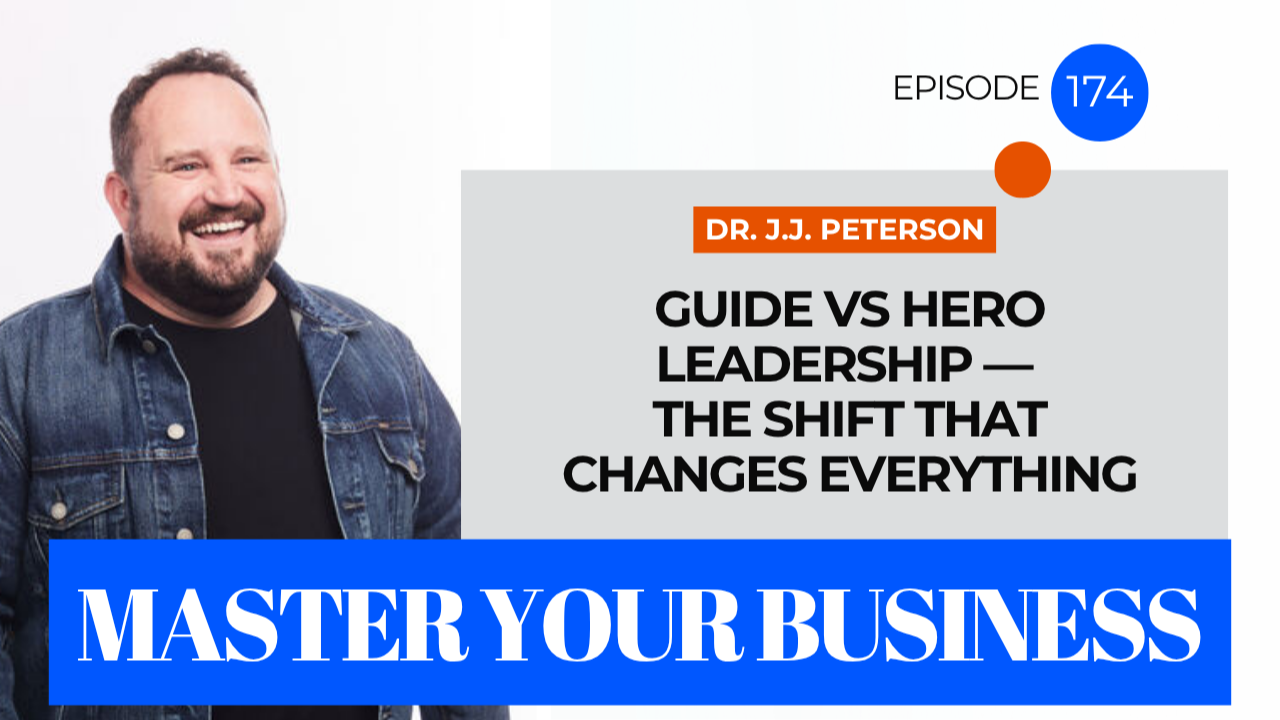
Most leaders think they need to be the hero. Here's what changes when they learn how to become the guide.
Key Takeaways
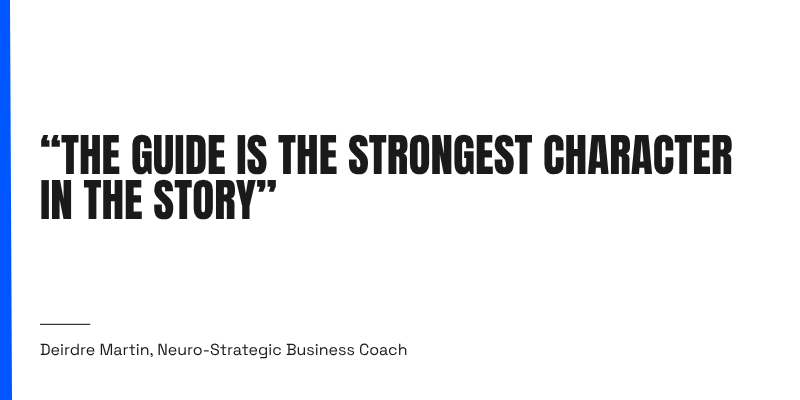
- The guide is the strongest character in the story. Leaders who try to be the hero often create pressure and distance. Leaders who act as guides help their teams win.
- Leadership communication changes everything. When you start with what your team wants and the problem in their way, people listen differently.
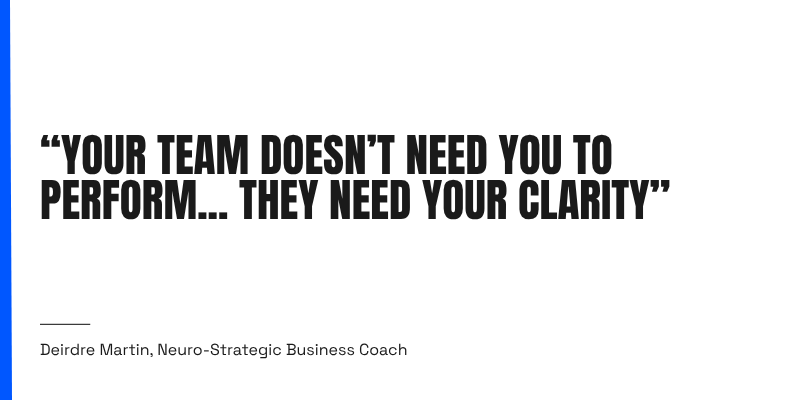
- Your team doesn't need your performance. They need your clarity, confidence and ability to lead them forward.
- Joy isn't a reward for the work. It helps people recover from stress, build resilience and do better work over time.
- You don't need to choose between ambition and empathy. The strongest leaders learn how to be both driven and deeply human.
When leaders struggle to get buy-in from their teams, they often assume the issue is motivation, culture or execution. So they try to solve it by becoming more visible, impressive or forceful. They speak with more urgency, tighten controls, push harder and often end up micro-managing because of the pressure.
But that usually makes the problem worse.
The issue is rarely effort. It's positioning. More specifically, it's how the leader is positioning themselves inside the story their team is living.
In this conversation on Master Your Business Podcast, J.J. Peterson shares a powerful reframe. In any story, the hero is not the strongest character. The guide is. And once you understand that, the way you lead, communicate and influence people starts to change.
This article explores the difference between guide vs hero leadership, why so many leaders get stuck performing instead of guiding, and how to communicate in a way that helps your team lean in instead of switch off.
Why hero leadership backfires
A lot of leaders have been taught, either directly or indirectly, that leadership means being the person with the answers, energy and vision. The one who inspires. The one who drives the result. The one who carries the team.
That sounds admirable. In practice, it often creates a strange dynamic. The leader becomes the centre of the story, while everyone else becomes supporting cast.
That's where communication starts to break down. Instead of inviting people into a shared mission, the message starts to feel like a performance. It becomes about the leader’s targets, the leader’s urgency or the leader’s identity. The team may comply for a while, but they rarely feel ownership.
Hero leadership can also create competition where there should be trust. If the leader is trying to win, and the employee is also trying to win, they can end up acting like they are in separate stories. That gets expensive.
The result is lower engagement, weaker collaboration and a team that feels managed rather than led.
The guide is the strongest character
Stories help people make sense of the world. And in most stories, the guide is the one who changes everything. Think Yoda, Gandalf or Dumbledore. They're not there to prove themselves. They're there to help the hero succeed.
That's what strong leadership looks like, too.
A guide doesn't need to dominate the room. A guide brings two things: empathy and authority. They understand what people are facing, and they have enough experience and steadiness to lead them through it.
That creates a very different emotional experience for the team. Instead of feeling managed, they feel supported. Instead of feeling scrutinised, they feel understood. Instead of feeling like they are helping the leader succeed, they feel like the leader is helping them succeed.
Big difference.
Guide leadership doesn't mean going soft, lowering standards or becoming passive. It means being clear about where you are going, while positioning yourself as the person who helps others get there.
Guide vs Hero Leadership.
Most leaders think they need to be the hero. The stronger move is to become the guide who helps the team win.
Hero Leadership.
Winning the room. Driving the message. Carrying the pressure. Making the story about the leader.
Pressure. Distance. Low ownership. A team that complies, but does not fully engage.
Guide Leadership.
Understanding what the team wants, naming the obstacle and helping people move forward with clarity.
Trust. Ownership. Engagement. A team that feels supported, not overshadowed.
The Better Question
Instead of asking, “How do I prove I’m the leader?” ask, “How do I help my people win?”
How guide leadership changes the way you communicate
One of the most practical parts of the conversation was J.J.’s explanation of how he opens talks, meetings and presentations. He never begins by trying to get people to like him. He doesn't open with noise, hype or performative energy. He starts with the audience.
First, he names what they want.
Then he names the problem standing in their way.
That's the shift.
Many leaders do the reverse. They start with the solution. They walk into the room and say what is changing, what needs to happen, what people need to do, and how quickly it must be done. The problem is that no one has been invited into the story yet. The leader is already prescribing action before making the problem feel shared and relevant.
Guide leadership slows that down.
It starts with something like this:
- Here’s what we all want.
- Here’s what is getting in the way.
- Here’s how we move forward together.
That structure creates emotional alignment before operational change. It helps people understand why this matters, how it connects to them, and why the plan deserves their attention.
Simple beats scattered.
What most leaders get wrong about confidence
One of the strongest points in the conversation was this: it's hard to act like a guide when you are insecure.
A leader who's trying to prove themselves often overperforms. They become overly polished, defensive or eager to impress. They mistake visibility for authority. But real authority doesn't come from trying to convince the room. It comes from caring enough about the people in it to lead them well.
That's the bit people miss.
Guide leadership requires grounded confidence. Not arrogance. Not false certainty. Just enough steadiness to say, “I understand the challenge, and I can help us move through it.”
That kind of confidence makes people feel safe. It lowers noise in the room. It helps teams focus on the work rather than managing the emotional state of the leader.
If you are leading a project, a team or a business, your people shouldn't have to carry your uncertainty for you. They need your strength, your clarity and they need to know that someone is holding the thread.
The Badass Softie model
J.J.’s new body of work, Badass Softie, gives language to a tension a lot of leaders feel but struggle to articulate. They want to be ambitious, driven and commercially sharp. They also want to lead with heart. They don't want to become a jerk in order to be taken seriously.
To achieve that, the strongest leaders aren't choosing between power and empathy. They are learning how to hold both. J.J. describes this less as a balance and more as a dance. There are moments that call for intensity, momentum and decisiveness. There are other moments that call for care, space and grace.
Both matter. Neither works well without communication.
A leader who is all drive can create fear. A leader who is all softness can create confusion. But a leader who can communicate clearly through both modes becomes someone people trust.
That's what makes the Badass Softie concept so useful. It gives leaders a more honest model. One that allows for ambition without ego and compassion without collapse.
Why joy matters more than most leaders realise
Near the end of the conversation, the discussion moved into a slightly different but deeply connected space: joy.
During which, the concept of joy at work was framed as a strategic part of sustainable leadership.
J.J. talked about joy as something that helps people recover from stress and uncertainty and experience more resilience in the work itself. The point was simple: joy is not something you earn at the end. It helps make the work sustainable while you are in it.
That matters because many leaders build cultures around pressure and output, while treating joy as optional. But teams do better when they can recover, when work has meaning, momentum and moments of lightness. They do better when leadership doesn't feel emotionally sterile.
Joy can come through progress, gratitude, connection, movement, nature, celebration or flow. It doesn't need to be loud or forced. But it does need to be present.
If you want resilient people, you can't build a joyless environment and expect high performance to stay healthy for long. Research on positive emotions and resilience supports the broader principle that positive emotions can help people rebound from stress more effectively and recover faster from negative emotional arousal.
How to start making the shift from hero to guide
If this conversation landed for you, start here:
- Audit how you currently show up. Do your meetings, messages and updates centre the team’s reality or your own pressure?
- Clarify what your people want. What does this team actually care about? What are they trying to achieve, protect or avoid?
- Name the real problem. Speak to the obstacle clearly. Do not make the team the problem if the issue is really the system, process or lack of alignment.
- Lead with empathy and authority. Show people that you understand the challenge and that there is a credible path forward.
- Build more joy into the way you lead. Not as performance. As practice.
The goal is not to become a different person overnight. Instead, stop putting yourself at the centre of the story and start guiding other people through theirs.
FAQ
What is guide vs hero leadership?
Guide vs hero leadership is the difference between leading as the central character who needs to win, and leading as the person who helps others succeed. Guide leadership builds trust, clarity and ownership.
Why is hero leadership a problem?
Hero leadership often makes the message about the leader rather than the team. That can reduce buy-in, weaken engagement and create pressure instead of alignment.
How can I improve leadership communication?
Start by naming what your team wants and the problem standing in their way. Then introduce the plan. People respond better when they feel seen before they are asked to act.
What does Badass Softie leadership mean?
It's a leadership style that combines ambition and heart. You can be commercially sharp, driven and clear, while also leading with empathy and humanity.
What role does joy play in leadership?
Joy helps people recover from stress, stay resilient and work better over time. In strong teams, joy is not separate from performance. It supports it.
Related Reading
- How to Use Neuromarketing to Tell Brand Stories That Stick
- 5 Behaviours of High Performing Teams
- How to Become a Neuro-Effective Business Owner and Scale with Ease with Maureen Hewitt
Tools and Resources
Badass Softie Podcast – A practical show to help you shift from hero leadership to guide leadership in your communication, meetings and team culture.
Conclusion
Most leaders don't need more charisma. They need a better role to play.
When you stop trying to be the hero and start acting like the guide, your communication becomes clearer, your team feels safer, and your leadership gets stronger. You create more ownership, trust and momentum. You also make more room for the kind of ambition that doesn't burn people out along the way.
Guide vs hero leadership isn't a small mindset tweak. It changes how you speak, how you lead and how your team experiences you.
And that... changes everything.
Full Transcript
[00:00:00]
[00:00:00] Introduction — Why this conversation matters
[00:00:00] Deirdre Martin: If leading your team sometimes feels a little bit like you're herding cats while you're carrying the weight of the whole company on your shoulders, let me just tell you here and now, that doesn't mean that you're bad at leadership. It possibly just means that you're actually really fully overloaded.
And here's the thing that happens to a lot of leaders and founders and people who are running businesses and they have other people who are supporting them with it is the thing that might be. Maybe slowing it down or not helping you achieve the performance that you deserve as quickly as you deserve it.
It could be something to do with your communication style, and I don't mean, you know, be fluffy and nice kind of communication style. I mean the kind where you walk into the room, say one sentence and suddenly. The whole thing. It's like, you know, taken off like a steam train, because everyone knows the direction you're going, why it matters, and what they're responsible for.
And I've seen this in my career in banking over the years because [00:01:00] when the leader's unclear, what happens is the team gets anxious. They need that certainty so that they know what's happening and the direction in which they're going. And anxious teams don't move forward. People who are anxious, they freeze or they fight or they check out. And that's where we're going today. My amazing guest is Dr. JJ Peterson. He's StoryBrand professor in residence. He's a leadership and communication expert, former university professor, and someone who spent years in rooms with leaders who look unstoppable on stage and then create absolute fricking chaos behind the scenes.
And in this conversation, JJ breaks down a shift that's seriously so wild once you see it. Which is that most leaders are trying to be the hero of the story, the hero of the business, but actually the best leaders, the ones we really want to follow, the ones that we aspire to be like, they're the ones that show [00:02:00] up as the guide.
We're talking how to lead without crushing your team, how to stop dumping new initiatives on people like there're a problem and the exact way to open meetings so people lean in instead of shrinking back. Quick note. JJ also has a resource for you connected to his work. I'll tell you where to grab it later in the episode.
So keep listening, and if you haven't heard JJ'S first appearance on the show, our episode on Story Powered Marketing, go and binge it after this. He's incredible. So today's episode is what happens when you take story and aim it at leadership. All right, let's go.
Jj, welcome back to Master Your Business Podcast.
[00:02:37] Dr. JJ Peterson: Thank you for having me. So excited to be here.
[00:02:40] Deirdre Martin: Jj, you are like the only person who's had the privilege of coming back for a second time.
[00:02:46] Dr. JJ Peterson: Oh my goodness. That is a privilege. It's so good to see you. I.
[00:02:50] JJ's journey from improv comedy to StoryBrand to Badass Softie
[00:02:50] Deirdre Martin: Well, I'm super excited to have you here today because the last time you were on the show we talked about all things story powered marketing, and this time we're talking about [00:03:00] maybe a different kind of a chapter that's evolving for you and for me, coincidentally.
So how about starting there and sharing what that looks like for you?
[00:03:08] Dr. JJ Peterson: Yeah, so for the past 10, really almost 11 years, I have been working at StoryBrand helping company clarify their message, helping companies clarify their message using the power of story, which is what you have done as well. And I have loved that and I'm continuing to do that.
However, I just turned 50 this year. I also got married. About a year ago, I am now the father of four children, which was never on the radar. And so it causes me to kind of, you know, pause and go, what do I want the next 10, 15 years to look like if I have 10 or 15 years left in the business world and working.
Probably longer, but you know, like ideally if it's like, if I could retire at 60, what do I wanna do in the next 10 years? And I want to continue to help people, [00:04:00] businesses in particular, clarify their message. However, my journey is about 20 years ago, I actually was doing improv comedy. I was touring around the United States doing comedy.
And I loved it, but the touring life was just not for me. Like, you know, staying up till two in the morning, taking a bus, playing, you know, car to the next city and then doing it all over again. So it was really fun. But the lifestyle just wasn't really for me. And I remember being on a tour stop in Washington DC and I was talking to my friend and just saying, I love what I'm doing, but I'm ready for something different.
And he just kind of started peppering me with questions. And I realized that when I was touring, we did a lot of like conferences and corporate events and I would see these unbelievable leaders on stage. These people who are just like dynamic and bold and doing big things. And then I would [00:05:00] watch them walk off stage and I would see a lot of the trauma that they were creating on their teams.
And I would see a lot of the pain that they were causing, or just the miscommunication where they were trying to get things done, but they couldn't get their team on board. And I remember telling my friend, I just would love to go back and help raise up the next generation of leaders. To be better about the way that they communicate and lead.
And he was like, well then why don't you do it? And so I, at that point then I decided I was gonna be done, kind of wind down my comedy career. And I went back and got my master's degree. And then I ultimately got my PhD and I started teaching at the university level. And my, the first two classes that I taught were leadership.
So every freshman that came into the university had to go through my leadership. Class. And then the second class that I taught was communication. And those really is where I started kind of building my career in helping leaders communicate and [00:06:00] lead well understand who they are. And I feel like I've always kind of done that like in, you know, in, in the StoryBrand world.
But as I started to think about my legacy of what I wanted my last 10 years to be, I thought I really would love to get back to refocusing on helping leaders communicate well and lead well. So while I'm still at StoryBrand and still my title there is actually professor in residence. I'm actually launching a new brand called Badass Softie.
And Badass Softie is the idea that I, that you can be a leader who is unapologetically driven, but also lead with heart. And so what I do is I help leaders understand their own kind of leadership style and who they are, and then. Teach them how to communicate clearly with their teams and also communicate if they're want to be thought leaders like in books and courses and webinars.
And then ultimately there's kind of a third component about bringing joy to the work you're doing. And that's really kind of what I've shifted a [00:07:00] little bit. I still help companies with their marketing, but really I'm back to that heart that I had 20 years ago of helping leaders be better about communicating and about the way they lead their teams.
[00:07:11] Deirdre Martin: Oh, I love this evolution for you, jj. And it's not even evolution, it's like closing the story loop. Right?
[00:07:18] Dr. JJ Peterson: And like I said, I feel like I still did that while I was in, but I'm kind of just refocusing a little bit and getting back in that space a bit more.
[00:07:26] Deirdre Martin: Yeah, I love that. And so aligned to my own journey too, which is interesting because I've just finished my advanced coaching diploma with neuroscience, and it's like, where's that gonna lead me?
And it is gonna open more doors for conversations with companies and leaders in those companies, which was my background, right? That's what I did for 20 years. I was a leader in a corporate, and so I'm like, Ooh, I'm going back there now. Now I have the. Wanna say I have the kahunas to do it because like, it took me a while to get outta there.
But to go back is exciting. So I'm curious. Right. And I think there's definitely an alignment [00:08:00] between the story and the external story that we tell people, but then there's the internal stuff and how we lead people. And it's that communication and influencing that you're referring to. Oh yeah, I can definitely picture those guys coming off the stage and the conversations with them like, yes, PTSD here.
So talk me through what that looks like for a leader and like some of the challenges that they're facing with their teams. And I'm thinking even multi-generational and working from home and hybrid environments and all of that kind of stuff. So where do you start with people?
[00:08:37] What it means to be a "Badass Softie" as a leader
[00:08:37] Dr. JJ Peterson: Where I start with people is really showing up and saying, you need to have your own point of view as a leader.
And what I mean by that is it kind of bleeds into a couple different areas. The first is, I think a lot of people like me have kind of been in the, like, you know, I've worked with Fortune 20 companies. Like I, I like at, you know, of the top 20 companies in the world. I think I've worked with at [00:09:00] least five of them.
And then in the top 100 you're talking, you know. Again, a huge amount. And so I've been in a lot of these rooms with very powerful, strong people. And a lot of times I thought I needed to be like them. And so I, you know, listened to, maybe some crypto bros that I wasn't too excited about listening to, but I wanted them to push me to be.
Like more bold and ambitious. And they did, but I kept looking at them going, that's not who I am. And so the first thing I really work with leaders on is understanding what is your point of view? What type of leader do you wanna be? Pause for a minute. You've looked at everybody else. You've learned from everybody else.
Who do you want to be? What are your goals and ambitions and what is the story you wanna write with your life? That's really where I start with leaders. What kind of story do you wanna write with your life? What kind of legacy do you wanna leave? Then from there. What I do is I walk through and it's not always sequential depending on what [00:10:00] people need, but then really the next part is helping them understand that their job in this world, after they understand their own story and who they wanna be, then it's showing up and saying, alright, I.
[00:10:11] The hero vs guide framework — and why most leaders get this backwards
[00:10:11] Dr. JJ Peterson: How do you lead others? And you and I come from the StoryBrand world, and we understand that the most powerful character in any story is the guide in the story, not the hero. Right? So, you know, we've talked about this before. I know you've talked about this before, but in the movie, Luke Skywalker is the Hero and Yoda is the guide Frodo.
in Lord of the Rings is the hero. Gandalf is the guide. You know, you could go on and on. Dumbledore is the guide. Harry Potter is the hero, and what that means is there's always somebody who in a movie that comes along to help the hero win the day. Heroes are actually insecure. They're weak in movies. They're up and down all over the place.
They're in jail. They're alone. They've made mistakes, and the guide comes along to help the hero win because they've been [00:11:00] there and they've done that. They've already won the day. They don't need to prove anything. And as a leader, if you shift your mentality. To from, I need to win this meeting, or I need to win this quarter, or I need to, no, and that's a hero mentality, and that's not bad for your own personal journey, but when you're leading other people, they can see that if you are showing up as the hero of your story and they are living their own story, that they're the hero of, and often leaders position themselves as.
In competing stories with the people that they're leading. They're trying to be the hero, and their employees are trying to be the hero, and then they're living in two different stories, and in many times, they're actually competing against each other because one has to win and one has to lose if you're both in hero journeys.
But if you as a leader, show up as a guide. The person who is the wise, empathetic, authoritative figure who's gonna help people win, then you are not [00:12:00] only the strongest character in the story, but everybody wins. And where that really comes into play is what we were talking about, communication. It's really this idea of when you stand up in front of your team to do the kickoff call for the year, are you saying, Hey guys, this is gonna be our best year, yet we are going to double our revenue.
We are going to, you know, these are all the things and you're, we have to be focused and driven, and all of those things. That story, if a leader gets up and says those words, that story is about the company and about that leader. It's not about the employee. And what you have to pause before you do any kind of excitement.
Launch communication is go, how do I communicate to this team in a way that invites them into a story that they get to be the hero of? And what that, and I'll give some really simple tips here.
[00:12:54] The two-sentence formula that wins every room
[00:12:54] Dr. JJ Peterson: The first thing is you have to pause and understand what is it that everybody in the room [00:13:00] wants, and what is the problem that is getting in the way of them accomplishing that.
So for instance, when I go on stage at a marketing conference and I'm speaking to a thousand marketers or a thousand businesses. I don't walk up on that stage and say, how's everybody doing today? Oh, I can't hear you. How's it? No, I do. That's, I will walk out of the room if somebody does that on a stage, but I'm not it.
Because what you're doing is you're trying to get the audience to affirm you. That's a hero moment, or I don't get up and I don't tell the funniest story that I have to try to get people to like me or tell a joke. You know, boy, the weather's crazy here. No, you don't do any of that. I walk up on stage and I say two sentences almost every time.
The first is I have somebody else introduce me, and then I walk up on stage and I say, how many of you are here because you want to grow your business? Everybody's gonna raise their hand. If they've just spent a couple thousand dollars [00:14:00] to grow their business, they raise their hand. So then I will repeat that and I will just say, you're right.
We are all in this room to grow our business. But here's the problem. Most of you are wasting thousands of dollars on marketing because you're telling the wrong story and you don't even know it. You can hear a pin drop in that room, and it doesn't matter. People don't need to like me. They don't need to think I'm funny.
All of a sudden now I'm in their story. I'm there to help them win. So when you're presenting to a team, when you stand up and start with, this is gonna be our best year yet, and we're so excited, or you start berating your team instantly, you've become the hero of the story. And they recognize that and they shrink.
But if you pause and you go, everybody in this room is really driven by serving our customers well. You start with something that they would all nod their heads to, or you say, everybody in this room wants to be collaborative [00:15:00] and really help support each other, so you just name it and then you say, but here's the problem, is our systems are actually getting in the way of us helping each other.
In fact, the way that we. Operate is actually slowing our coworkers down because of the systems, not because of who you are. So we are going to operationalize our systems in a way that actually helps everybody win versus coming in. So that I started with, you want to be collaborative and help each other.
The problem is our systems are wrong. Then I say, here's the solution. What most leaders do is they walk in with the solution. They'll start out by going, all right, everybody, so we are gonna operationalize our systems and we are going to make everybody, and everybody needs to be on board with this. You and I need a paper signed by Tuesday that tells me that you're gonna do right.
And everybody is going, oh crap, I'm in trouble. How am I gonna do this? How does this help me? And if you. Invite them into a story and control the narrative first by saying, here's what you want [00:16:00] and here's the problem that now I'm gonna present a solution for. It positions everybody. You serve as the hero of the story and you're their guide.
You're giving them the tools and the plan to help them win. So those are how I really start. I really start with understand your own leadership style. Who do you want to be and what do you want to accomplish in the business or in yourself? Then two, how then are you going to communicate that and show up?
And that may be publicly with your marketing, so you're putting out your thought leadership or your business leadership, or your business brand, or it really, in many ways could be internally. And how are you showing up and leading your own team in a way that really. You're the strongest character in the story if you show up as a guide.
But nobody really thinks of it that way. They see you as the person who's helping them win. And then really the last piece that I work with people that, that's the core. I will say that's the core and that's what you and I do a lot of. And then the last piece that we can talk about kind of at the end is this idea that I'm [00:17:00] kind of with the badass softy brand is the idea of practice joy.
And there's a lot of pieces to that that come with it. But really the core is that communication piece.
[00:17:11] Deirdre Martin: Oh, that's so powerful, jj. Like, I literally had goose pimples and I could feel the pin dropping in the podcast over Zoom. Yeah, I love that. And it's so impactful. And even when you talk about that from a leader's perspective it's like personal branding for them in terms of designing what their narrative is gonna be in the organization, in the company, and also for their legacy beyond that too.
Right.
[00:17:36] Dr. JJ Peterson: Yeah. And you know the truth is when you're younger in leadership, you are borrowing from other people and you're trying to figure it out. But as you grow in your leadership, I think understanding who you want to be and what kind of legacy you want to leave behind, and if you wanna be the person, I mean, I actually know business leaders who are like.
I was listening to a guy speak the other day and he literally said, [00:18:00] if you wanna work life balance don't come work for me. I spend weekends with my kids and that's it. But then I work about 20 hours a day and I plan on doing that for five years, and then I wanna retire. So if you go and work for him.
So in some ways that's actually really, really clear. Like I actually appreciate him going, like, if you want work-life balance, don't be here. But if you want to be here for five years and maybe almost destroy yourself, I'm gonna make you a millionaire. He was just like very clear about it. But I knew then I don't want to be that person.
Right. And I think a lot of us look at leaders like that and you go, oh, you're right. I should be, you know, getting up early and cold plunging. Exercising and doing all of these mind meditation and do all the things that like, you know, starting at 3:00 AM so I can be done by three. And they put out all of these things and it's like, yeah, that's good, but I don't know that that's who I wanna be.
And when you understand who you want to be, it actually brings confidence to the room for everybody else. And you're not trying to impress, you're not trying to convince, you're not trying to win, [00:19:00] you're not trying to beat other people, is what I mean. And by win. I think like in my company, I want to win. I do, but not against my own employees.
Right? I want us to win together as a team. And when you understand that first, fantastic. But then how do you communicate that? Because also, I know a lot of people who are very kind, caring, loving people, and they're so stressed and overwhelmed that then they come in and they think they have to be curt and quick with their conversations and they don't realize they're coming across as.
Assholes, really. And they're not. They're not, and they don't wanna be, but the way they're communicating is actually doing that. And so if I can just give them a few tools to reframe the way they even start conversations, they're gonna not only come across the way they want to, but they're going to be more effective with their teams.
[00:19:52] Deirdre Martin: They're going to be more badass leaders, right?
[00:19:56] Dr. JJ Peterson: Yes. Yeah, because that's really what it is.
[00:19:57] Being a Badass Softie — it is a dance, not a balance
[00:19:57] Dr. JJ Peterson: This is not about, this is one of the things when I talk [00:20:00] about badass softie, it's not being an asshole or being like a hugger. That's not what this is about. Right? Like some people are like, oh. Oh, you know, so which time?
Sometimes I'm a jerk and sometimes and I'm like, no, no, no. Being a badass does not mean being a jerk. That's actually why I say, call it badass softie. You can be a badass. You can work hard, you can be driven. And in fact, there are times, even with my own family, I have to say, Hey guys, this week. I'm not gonna be able to show up to Boy Scouts.
I'm not gonna be able to show up to this. 'cause we're in a mode that I have to be head down and driven. But they know why, because it's aligned with our family values and where we're headed and actually communicate that. And then maybe the next week I take some time with them. It's not really a balance.
It's like when do you be like, you have to be always both soft and driven. And the reality is, I think it's a more of a dance. Than it is a balance. Like you have to learn how to figure out when are those moments that I push in and we're all gonna [00:21:00] be together a little bit more ambitious?
And then when are those moments that we need to care a little bit more for each other and give space and grace? And both of those happen in tandem. They're not isolated. And so it's kind of learning to do that with a dance. And then even in those moments, again, I think more importantly, it's when you're being driven and when you're being more.
Kind and kind of holding things loosely. It's how you're communicating that because if, even if you can be driven, driven, driven, and then all of a sudden you're offering grace to somebody in the team that maybe somebody else doesn't feel like they deserve grace in that moment, well. That can also be, if you're too soft, that can also be detrimental to your team.
And so still, even in both contexts, being able to communicate clearly why things are happening, what is the plan and the vision, and invite people to be a part of it. Not just respond, but be a part of the narrative.
[00:21:59] Deirdre Martin: I love [00:22:00] all of that for so many reasons.
[00:22:01] Why leadership communication works at home too
[00:22:01] Deirdre Martin: But first off, I love that you mentioned family and how you communicate as a leader in the family, because leadership doesn't necessarily mean you have to be a top exec in a Fortune, whatever company.
It can be at home. It can be on the soccer pitch, it can be, you know, wherever you do stuff. And even if you're a solopreneur with a va, you're a leader to that va, right? Yeah, so it's like it doesn't matter how big you are, everybody is a leader and this communication is relevant. This style of communication, JJ, I think is relevant for everyone.
Everyone,
[00:22:34] Dr. JJ Peterson: a hundred percent. I mean, I am my I'll be not necessarily vulnerable, it's not super vulnerable, but it's in the sense of, you know, my daughter is getting ready for college and we are trying to figure out how to help her. Instead of us saying like, you're getting up at this time, I'm going to wake you up at this time every day and I'm gonna make you breakfast in this way every day.
You know, like we do with our 8-year-old, we have an 8-year-old and it's like I wake him up in the morning, we make eggs, we have our morning [00:23:00] routine, but the older one, she's going off to college and we have to help her start being able to be responsible for herself. A lot of times that means she's staying up later than we want her to.
Now, I can either like have a conversation where I'm angry and bit and like yelling at her for staying up too late because I know she's gonna be late for school in the morning. Or I can begin the con of understand of like, what does she want, not what do I want for her, but what does she want and how do I help her align her actions with what she wants and how do I position her staying up late?
As the problem that's getting in the way of what she wants. She literally needs to graze her grades just a little bit in order to get the right scholarship to go to the college she wants to go to. Well, if she keeps showing up late for school and falling asleep in class, she's gonna miss out on that scholarship.
She's not gonna be able to go to the college she wants to go to. So instead of. You need to get up, get up. What are you doing? Stand up late. I have to, I could [00:24:00] do that. And there were times that I have, and there's still times that I'm like, you're going to bed. I don't care. You know, because it's a little bit different with parents.
But if I really want her to get responsibility and in essence create her own narrative, versus trying to live and satisfy my narrative for her, I have to communicate differently than just saying, go to bed. Go to bed, get up. I have to say, what do you want? What do you want? Talk. Let's talk about that.
All right. Here's the problem I'm seeing. Let's talk about a plan so that you can actually get what you want by overcoming this problem.
[00:24:33] Deirdre Martin: Again, I love this and actually it's really reminded me of a conversation I had with the leader at one point in my career where he brought me in for a career review and.
I had gotten several promotions in quick succession, and he said to me, Deirdre, you've gotten where you are because of your own drive results and ambition, but to get to the next level, you now need to learn how to bring people along with you. And that advice has stuck with me for so many years [00:25:00] later.
And I'm curious, like, I think I've kind of figured this out, but for people listening, JJ if they got that kind of advice and they're trying to figure out, okay, I know I need to communicate a narrative and communicate. The direction in a little bit differently, but if I've got a bunch of people, 50 people, a hundred people, 200 people, and I'm trying to bring all of them along with me, how can I get inside their heads to know what is gonna motivate them to be able to bring them along?
[00:25:27] Dr. JJ Peterson: Yeah, so there's obviously, when you're talking to individuals, you want to be able to identify those things, but you may not know all the individuals.
[00:25:33] How to communicate change to a team of 50 or 500 (the umbrella brand script)
[00:25:33] Dr. JJ Peterson: But even in a room, you know, like I said, when I'm in a room of a thousand marketers, what I'm looking for is the common narrative that they're all living.
So there may be a chiropractor in the room and a Fortune 500 company, and I have to figure out what is the common story that they're all trying to live. So when you're addressing. 50 people in the room, or five people in the room, or 500 people in the room, you're really going, what is the common narrative for this [00:26:00] group?
What a story can I, I invite all of them into. Now when you meet one-on-one, that narrative is gonna be a little more nuanced because it's directed more at that individual. But we call it an umbrella. Brand script. It's really the high level what is the common narrative that they all have. And so, you know, if you're talking about again, like we are going to have a new system that is about project management.
We want everybody to get in line with this new project management system. They have to learn it. The reality is, if I come to the table to this and 50 people. And I say, we have a new system that we need you to use. I have just created a problem for them. I've actually created a problem because they have to now work harder.
They have to change the way they've done things. They're now like underneath there's some scrutiny maybe. It feels like there is, I'm scrutinizing the way that they've currently done things. So there's, I'm essentially adding a [00:27:00] problem to their plate. But instead, even with those whole 50 people or the whole company that we're implementing this whole new project system, if I start with a problem that they're already feeling, now what I'm doing is bringing a solution.
Instead of putting a problem on their plate, I'm identifying a problem. Then I'm offering a solution to solve a problem. I know all of these people are feeling now, if it is a fake problem, this is where you can get off a little bit. If you're making up a problem to try to get people on board to try to manipulate them to be on board they'll smell that.
It will go away quickly, so they won't follow you. So it can't be, what you're not looking for is like, well, let's just make up a problem. It has to be something that everybody is feeling. And the truth is, if you're a leader and you're bringing in a project system that, helps. You know, it helps. Then there is a problem.
This is solving. But if you're just doing it to get your way, then people will smell that. That is the hero journey, right? Like [00:28:00] that you are becoming the hero. And even worse, maybe you're becoming the villain if you're coming in and just trying to power your way through. 'cause this is my preference. This is what I want to do.
That's not great leadership. You're not actually being a guide in that moment. You're being the. You're trying to be the hero of your own story and ultimately you're becoming the villain. But if there really is, if you're paying thousands of dollars for project software, it's because there's a problem.
And so you have to identify the problem. Don't make the software the problem, make the software the solution, start with the problem the solution solves.
[00:28:34] Deirdre Martin: Oh, that makes so much sense. And. I can see how people will be just bought into that kind of strategic narrative and communication then and you know what, like it's just gonna make achieving the end goal so much easier.
But I'm curious with the clients that you've had JJ around this and the leaders you've worked with and the companies you've gone into, in terms of those leaders making that shift [00:29:00] to where, to your point, you know, they're not coming across as the hero. They're actually shifting into the guide. What kind of challenges in terms of identity do you see these leaders going through?
[00:29:13] Why insecurity is the biggest hidden leadership problem
[00:29:13] Dr. JJ Peterson: It's hard to be a guide when you're insecure. And I don't mean that as an attack, I mean. When, I'll give an example. So I teach at Vanderbilt University in the Master's of Marketing program. Now, I've been doing that for about six years now. So at this point, kind of, I know the routine, but I remember my first couple years that I was teaching there when I would get new students.
I was really insecure. One about the fact that I'm teaching at Vanderbilt, one of the most prestigious schools in the United States. And I was, you know, in my own brain, I'm like, do I belong here? You know, like that was it. Plus I hadn't been in the classroom for about. 10 years at that point, I had been teaching companies, but I'd never been in classroom with college students.
So I'm like, are they even gonna like me? All those [00:30:00] things. So when I would show up in the beginning, I would try to be impressive. If I'm most honest, I would try to be impressive. And so I would tell funny jokes and I would try to be kind of the cool professor, like, grades don't matter, you know, that kind of stuff.
And I would. Put on those kind of airs when I showed up in the room. And the truth is, it meant that I didn't do as well in the teaching and it meant that the students get, didn't get as much value. That was my own insecurity that was showing up in that moment. I was trying to impress them and I was trying to win in the classroom.
I wanted to get good reviews and I wanted them to like me, but instead if I just show up and do my job the way I know I do with care. It's not that I'm a jerk or anything, I show up with a lot of empathy, but I'm also confident in my own authority. That is how I serve people best. And so I'll give another kind of example here.
[00:30:54] JJ's story: shaking hands, no sleep, and 30 seconds to decide who to be
[00:30:54] Dr. JJ Peterson: A few years ago, I. Earlier in my StoryBrand career is I went to [00:31:00] speak for this company that does they're an investment company that they buy companies that are on, like growing and then they headhunt. A high-end executive and then put them in there and then exponentially grow it and then sell it.
Now, when I say they headhunt high executives, some of the executives who were in this room were like the founder of Shutterfly and the president of Xerox and a VP of Disney. And so it's like very high level. People that kind of were looking for their, almost like their last chapter, like their last 10 years of legacy.
And I go into this hotel and there's literally peacocks in the lobby. Everything is gold. I mean, it is like ornate. And I'm there the night before and. The owner of the company is walking me around and we keep bumping into these different people and every one of 'em is sitting there going, well, you know, I built my company on story.
I studied story. I know story. I hope this is good. You know, one of 'em came up to me [00:32:00] and said I want you to know this is the most expensive room you're ever gonna be in. And they were saying all those things to me. Well, I did not sleep at all that night. And the next morning I show up. And right before I walk up on stage, they're literally introducing me and one of the people from the company said I need you to know how much money we've spent on getting all these people here and you here, and I need this to deliver.
And I start to get ready to go. I have the microphone and my hand is shaking. I, which doesn't happen for me a lot, but I was shaking. I felt sick to my stomach. I hadn't really slept. And I had about 30 seconds to figure out how I was gonna show up on that stage. And I had to remind myself that all of these people were more successful than I.
They were richer than I. They had built bigger companies than I had. But when it came to. Walking them through the power of story and marketing in their company. I was the smartest person in the room and I had the most experience and I had put in the most [00:33:00] preparation, and I had put in the hours getting ready for that.
And if I showed up on stage and I got up on that microphone and I said, wow, I'm really nervous, you guys, this is a crazy, intimidating room. That doesn't, not only, it doesn't serve me, but it doesn't serve them because they did really like show up. They've spent a lot of money. They're taking time away from their company to be here for two days.
And if I show up like that, now they have to feel like they need to take care of me. Right. They have to be like, oh, he's nervous. We should make him feel better. So instead of actually being able to focus on themselves, A, I've either lost trust or B, they now become the person who takes care of me. So I had to show up and I did exactly what I did.
What I mentioned earlier is I stepped up there on the stage and I said, how many of you want to grow your company this year? Great. Most of you are wasting thousands of dollars on maybe millions of dollars on marketing, and you don't even know it. I started with the story, not [00:34:00] my own humanity or my own vulnerability or anything, and it allowed me to settle in and it ended up being a hugely successful workshop.
I ended up getting more clients after that, but. That's what I mean by the insecurity.
[00:34:13] The Yoda test — what a confident guide looks like under pressure
[00:34:24] Dr. JJ Peterson: When you show up, not with arrogance, but with, you show up with confidence in that you actually care about the people who are in the room and you've put the, in the effort and the time and you have the experience to lead them.
Be confident in that.
You know, if Luke Skywalker and Star Wars comes up to Yoda after a little bit of training and goes, are you sure that the force works? And Yoda's like, you know what? I don't know. I don't know what I'm doing. I don't know what's I'm just as insecure as you are. That's not a good story.
That's not a good guide. Luke is not served by that as well. He's gotta go figure out what to do on his own now. But when you show up with confidence, and so that's the part I think. When you ask, going back to your actual question of the idea of like what are some of the pitfalls or things that hurdles that people [00:35:00] run into in this.
It's that when you actually shrink in your own authority and confidence. Not only is that not good for you, but it's not good for the people you serve. And you don't need to show up with arrogance or false confidence. But understand if you really do care, A, a good guide really has two qualities, empathy and authority.
So empathy is, I understand what you're going through and I care about you because I've been there. And the second piece is I have a path forward. I've done this before. I know what I'm doing. And if you don't know what you're doing in that moment. You can be honest, but you wanna surround yourself with people who have helped you find a way forward.
So you don't have to say, I figured it out, I've done it. But you can say, our team has come together and we found a way forward. So you, when you shrink in your own, when you become insecure, remember it doesn't just not serve you, it doesn't serve the people that you are leading.
[00:35:55] Deirdre Martin: Oh, that's powerful, jj.
Yeah, I feel that like I [00:36:00] really can feel that. And even when you're talking about that as well, I can see me having done that sometimes where I've shrunk and I've made myself the hero and I'm like. Oh yeah, but I'm totally stealing those two sentences for everything that I opened going forward.
Thank you, jj.
[00:36:17] Dr. JJ Peterson: Yeah, and let's just close with one more thing. I actually relearned this again with Taylor Swift. So Taylor Swift documentary. I was watching it before Christmas because I had some extra time and I'm like, I'm gonna watch this. And there was a very powerful moment that I took away.
There was many, but there was a moment where she was in London, she was getting ready to do a concert and right before this had happened, there was a dance class of young girls that was using her music that had gotten attacked with a knife. A guy a person came, un attacker, came in with a knife, and girls were injured and even killed, and she met with all the families right before her concert.
And they didn't have the cameras in there. It wasn't this moment of like taking advantage of them or [00:37:00] anything. But she came out and she was in tears and she was really kind of emotionally struggling obviously, but she said something to the effect of people that are in this room that are out there.
Paid for the night of their life, and they don't need to be worried about me that in this moment, like she shared her feelings with her family and with her boyfriend and with her close friend. So it wasn't that she was like bottling everything down, but in that moment she didn't wanna walk on stage in tears and have everybody going, oh no Taylor, we love you, da da.
You know? No, she was showing up. As the best performer and in control of that three hours so that everybody else could relax and enjoy the moment. And there's a piece of that in there for me in that too, is that there it's not about not being vulnerable with my team. I'm very vulnerable with my team, however.
When it comes to, say, a project or work like personal, we can be vulnerable as we want. But when it [00:38:00] comes to a work project, my job is to basically show up in a way that allows them to just enter into the story instead of worrying about my story, right? Instead of going, oh, JJ didn't sleep last night, is he gonna be okay?
It's like. Maybe I didn't sleep last night, but that's not their problem. That's actually not their problem, and that's not something I need to put on them to carry. I need to show up with my strength and my confidence and my authority, my experience to help lead the way. As a human, we can be as vulnerable as we want, but in the leadership context of a project or a movement or a business, you show up with confidence because that actually is what serves your people best.
[00:38:42] Deirdre Martin: Ugh. And I'm like, I can see, and just picture what the ripple effect will be for teams when they come into this and step into this. And even hearing that, like what you've just said there, if you just took that and shared that with leaders and their teams, it's like, that's how I wanna be. You know?
It's like I wanna grow up to be like that. [00:39:00] Yeah.
[00:39:00] Dr. JJ Peterson: A hundred percent. Yeah.
[00:39:01] Deirdre Martin: Cool. Jj, oh my gosh, it's just been such a pleasure having you on the show again. I've really enjoyed this conversation. I'm nearly teary after hearing this Swiftie story too, by the way. I'm like, what? Thank you for that. So tell me where can people find you if they wanna reach out to you about this next chapter or any of the things that you have coming up?
[00:39:21] Dr. JJ Peterson: Yeah. Badass Softy podcast is really the best way. Like, if you enjoyed conversation like this is, I have a lot of conversations like this. I do some solo episodes and then also interview other leaders who I feel like are doing this well. And so, yeah, badass Softy podcast is really the best place to go.
[00:39:39] The science of joy and why leaders need to practice it deliberately
[00:39:39] Dr. JJ Peterson: And before we wrap up, I mentioned something earlier about Joy. And this is, I just kind of wanna close it with this. One of the other aspects that I work with leaders on is this idea of practicing joy. And it started from a place of me just wanting to have more fun in work, to be very honest of where I was.
Like, you know, I worked really hard for this [00:40:00] career, and then why now is it not fun? And. I wanted to have more fun, but then I started actually doing a lot more research about joy and the power of joy and the research shows there. There was a study by Harvard Center of Health and Happiness that showed that.
When you experience joy, it actually activates the reward and resilience centers of your brain. And what that means is it doesn't just make us feel good. It actually helps us recover faster from stress, grief, and uncertainty. So it actually makes the hard work that where we go through the stress and grief and uncertainty, it makes it.
We recover faster when we experience joy. And then the University of Michigan did a study about how when you experience regular moments of a joy, even just small ones, that you have lower inflammation and higher immune responses like, so it actually changes the way we recover from stress and changes to the way [00:41:00] our body deals with sickness.
And what I'm talking about with joy is not just. Like having fun and laughing. The research shows that the way that you experience joy, that you can experience it through awe. Finding something that brings a little awe or whimsy. The practice of gratitude, just being grateful. Changes your body, changes the molecular structure of your body, which is insane.
Connection and relationship. Movement creates joy, nature, positive anticipation. Looking forward to something. One that's really important for the work environment is finding flow. Actually, when you find flow at work or in a hobby or anything activity, you experience joy accomplishing something big, experiences joy.
So it's not just about whimsy, but when you as a leader show up to guide people, it's not often, I think I thought of joy as the reward for the work. Like when I work hard, then I can be happy. [00:42:00] Or when we accomplish something big, then I can be happy. But what the research shows is that. Joy isn't a reward for the work.
It actually is the work. It's the thing that actually helps us move forward. And the way I help people with that is with unreasonable hospitality and teaching them to do that with their own teams. But that's kind of the biggest piece for me in all of this, in a world where reward disconnected than ever, you were asking about like, generationally we're disconnected on Zoom and remote, we're disconnected.
You know, AI is taking a lot of the work that we used to, like, even with a va, I used to do more with a va, a human, and now I actually have some AI tools that help me out. Right. So we're, and I'm, this is not a bash on ai. I love what these new tools are doing for us. I think it can allow us to be more human.
But if we are living in this age of more disconnection and when we. Intentionally show up as leaders with understanding who we are, confident in who we are, [00:43:00] communicate really well, and then invite and practice joy in our own work and win the work of others. I not only think that you are as a leader going to have a better experience, your team is gonna have a better experience, and I don't think it's too farfetched to say that we're actually making the world a better place when we do that.
Let's be the kind of leaders who actually leave a. Better workspace and better legacy than the one that we came into.
[00:43:26] Deirdre Martin: Oh yeah. And do you know what? I think happiness and joy in life is one of the best success strategies for high performance.
[00:43:36] Dr. JJ Peterson: Yeah.
[00:43:36] Deirdre Martin: Yes, I completely agree. And I think it's. When you love what you do, it's, I hate that BS sentence about, you know, when you love what you do, you never do a day's work.
But actually when you love what you do, you're having fun and you're enjoying yourself. And so yeah, work doesn't feel work. Yeah.
[00:43:52] Dr. JJ Peterson: And the research actually shows, it changes your body, like it actually helps you recover from grief, stress. It helps you be more [00:44:00] creative, more productive. Lowers your inflammation, gives you stronger immune responses.
Like it's kind of insane that you go, oh, when I'm happy, life is better. Oh, interesting. I guess that works.
[00:44:11] Deirdre Martin: You're stepping into my neuroscience world here now, all of that. Yes.
[00:44:16] Dr. JJ Peterson: I love it. I love it.
[00:44:17] Deirdre Martin: Amazing. Amazing. Jj. Honestly, it's been such a pleasure.
Thank you jj.
[00:44:22] Dr. JJ Peterson: Thank you.
[00:44:23] Where to find JJ Peterson and the Badass Softie podcast
[00:44:23] Deirdre Martin: Okay. Whew. If you've been listening, oh, I have been doing that. You are not alone. And here's what I want you to take from this. First, it's hard to be a guide when you're insecure, not because you're weak, because insecurity makes you perform and performance makes your people babysit your emotions instead of doing great work, serious tree problem there.
Second is don't make the change the problem. If you walk into a meeting or a room going, we're rolling out a new system. Congratulations. You've literally just handed your team extra work and [00:45:00] called it progress. They're so totally gonna pick up on that and not buy into that bs. So start with the pain they already feel and make the system the solution.
Third, an amazing guide has empathy and authority. Empathy says, I get it. Authority says, I've got a plan. You need both, or you end up either steamrolling people or tiptoeing around the truth. Now, one thing to go and do today, not tomorrow, today, is before your next team meeting rewrite what your opening is gonna be.
Start with what your people want, then name the problem that's in the way, and then give them the plan. That's it. That alone is totally gonna change how they hear you. And if you wanna go deeper with jj, go and check out his Badass Softie podcast. I'm gonna link it in the show notes. That's the fastest way to stay in his world and keep building this skill.
And if this episode hit home, do me a favor. Send it to one founder friend who's carrying too much and snapping at people that they love. Nobody deserves that, including the person doing the snapping. [00:46:00] We're not doing that anymore. And if you haven't yet, please follow the show. Leave a review, and until next time, keep mastering your business.
Get the next one in your inbox. One idea a week on becoming known, generating demand and growing beyond yourself.
We hate SPAM. And we will never sell your information, for any reason.