Referral Marketing for Service Providers Who Are Done Chasing Clients
Apr 14, 2026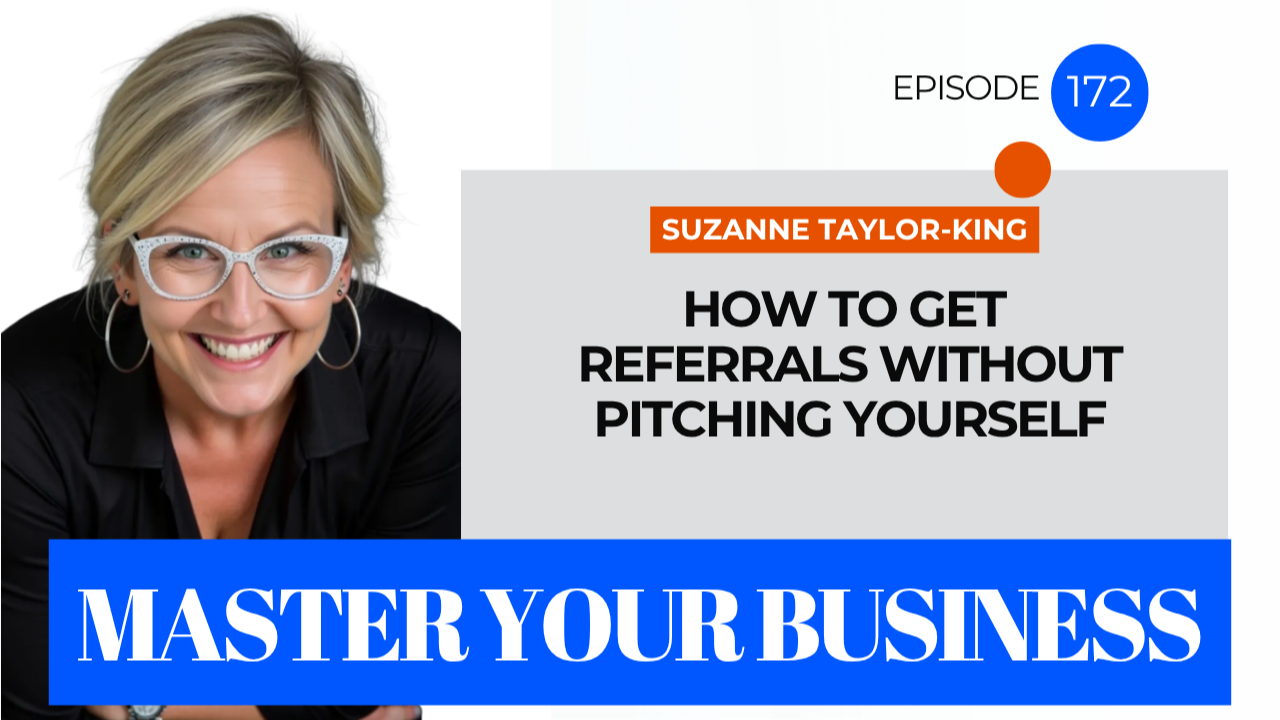
A smarter way to build trust, get spoken about to the right people, and attract clients without sounding needy, awkward, or always online.
If you’re good at what you do but growth still feels too hard, this is probably where the leak is
KEY TAKEAWAYS
- Referrals work best when you build trust with the people who already have access to your ideal clients.
- Generic freebies do not make you memorable. Useful, tailored value does.
- If people cannot explain what makes you different, they will not refer you with confidence.
- Strong referral relationships are built on fit, rapport, and relevance, not follower count.
- A referral strategy needs structure. Without it, referrals stay random and unreliable.
“Your give is not your opt-in, it's not a call with you, it's not a website.”
Why client growth still feels too manual
There is a point in business where the usual advice starts to wear thin. Because you're showing up, visible enough, doing good work, and have clients who are getting great results and are glad they hired you. On paper, things look fine. Yet the front end of the business still feels like much more effort than it should. You're in the weeds, putting effort into being found, remembered, and chosen.
That is the frustrating part. Not that the work is bad, but that the path into it feels clunky.
For many service providers, the problem is not a lack of talent or effort. They are trying to solve a trust problem with more visibility. That usually works for a while. Then it starts to feel like an expensive use of your time, resources and brain space.
You don't need everyone to know you exist. You need the right people to feel confident talking about you when the opportunity comes up. That is a different challenge altogether.
This is where Suzanne Taylor King’s idea of Middle-of-Funnel Value proves useful. It puts language around something many people sense but never formalise. Instead of trying to win over strangers one by one, you become valuable in rooms where trust already exists.
What this means is leveraging other people's ready-made audiences for you to show up. And when you do...
“Don't share what you do for a living, share what you think about what you do for a living.”
If your business depends on trust, then growth is less about being seen everywhere and more about being known well in the right places. That takes better positioning, stronger relationships, and a clearer reputation. And when you show up and explain what you think about you do, that explains why some people get referred often, and others don't.
Why more content is not always the answer
Some businesses DO need more visibility. That part is true. But visibility isn't always the bottleneck. For expert-led businesses, the bigger issue is often clarity. People may know your name and still not know when to recommend you. They may see your content and still struggle to explain what makes you different. That is where things start to slip.
A cybersecurity consultant can post every day and still be difficult to refer if nobody can say what type of risks they prevent. An HR consultant can be experienced and credible, yet still get overlooked if their message remains too broad. A coach can do brilliant work behind the scenes and still feel invisible because their expertise is described in vague terms.
When that happens, more posting will never solve the core issue. It simply produces more material for people to half-understand. Referral marketing works differently. It depends on whether someone trusts you enough and understands you well enough to put your name forward with confidence.
“So, not your top of funnel strangers, but people who already know, like, and trust you.”
Referrals don't replace visibility. They improve the quality of it. Less random reach. And more useful trust. Interestingly, the statistics around this are that:
- Built-in Trust: 92% of consumers trust recommendations from people they know more than any other form of advertising.
- Likelihood to Buy: People are 4x more likely to buy when referred by a friend.
- The "Willingness Gap": While 83% of satisfied customers say they are willing to refer, only 29% actually do without a proactive program or incentive in place.
- B2B Primacy: 84% of B2B buying processes start with a referral, and referred B2B leads convert 71% more often than cold leads.
What Middle-of-Funnel Value means in practice
The name sounds more technical than the concept really is. Middle-of-Funnel Value is the value you bring to people who are already inside someone else’s trusted world. That might be a paid community, a podcast audience, a client group, a mastermind, or a professional network.
These are not cold audiences. That's what makes the difference. Warm audiences listen differently. They trust more quickly. They are more open to recommendations because someone they already value has earned their trust.
“It means I want to build relationships with people who have people.”
Suzanne’s approach is not about forcing your way into those spaces. It is about becoming useful in a way that fits the community's context. For example, if the community is about AI, she shares prompts that suit that audience. If the community is more strategic, she shares a way of thinking that helps them see a problem more clearly.
This doesn't require some giant network-building project. It starts smaller. One person who has built a community. One useful contribution that lands well enough to be remembered.
If you are a service provider, the practical question is simple. Who already serves your ideal clients from a different angle to you?
It might be the accountant whose clients need sharper positioning. The business coach whose clients need better systems. The recruiter whose clients need stronger onboarding. The brand strategist whose clients need sales clarity. These people are not always competitors. Quite often, they are doors to a ready-made community of your ideal clients.
The point is not to chase every possible connection, it's to recognise the ones that make strategic sense for you to nurture and engage with.
Why generic freebies are easy to ignore
People hear “give value” and turn that into “send the PDF,” “offer a free call,” or “point them to the lead magnet.” Then they wonder why it doesn't create much traction. And, the reason is, because most people can feel when the value is really a polite route into a funnel.
“Your give is not your opt-in, it's not a call with you, it's not a website.”
There's nothing wrong with a good freebie or a useful lead magnet. But it's not the same as contextual value. Contextual value starts with attention. It says, I understand this community. I understand this audience. I know what would be useful here, and I'm not about to turn it into a pitch.
That might be an answer to a recurring question in someone’s community. It might be a practical framework that helps their audience make a decision. It might be a smart introduction between two people who should know each other. It might be a useful point of view that makes the host look thoughtful and well-resourced.
That sort of contribution tends to land well with the community owner and the audience inside the community. People remember it because it feels considered. They mention it later because it was useful. And that's the sort of word of mouth most businesses need more of.
Why people struggle to refer you clearly
Often, the challenge here is the language you use to communicate what you do for work. You can be excellent at what you do and still be difficult to refer if your message is fuzzy, your explanation is too broad, or your expertise gets reduced to generic labels.
If all someone can say is, “She does coaching,” or “He is great with strategy,” it gives them very little to work with. It doesn't help them recognise the moment when you are the right fit for someone they know.
This is why Suzanne’s point about sharing how you think is so important. People repeat ideas more easily than they repeat service descriptions. That doesn't mean you need a clever slogan. It means you need language that is clear, specific, and easy to pass on.
If you help founders simplify messy offers so sales feel easier, say that. If you help regulated firms build trust-led marketing that doesn't feel awkward, say that. If you help experts move from scattered visibility to strategic authority, say that.
The stronger the language, the easier the referral. And when people know how to describe you, they know when to think of you.
Why the wrong relationships drain more than they give
Not every well-connected person is worth building a relationship with. Some people who look impressive from a distance can feel exhausting up close. They may have a good audience, strong personal brand, plenty of visibility, but when you're on the inside of the world or having a conversation with them, it may feel strained and transactional.
“You need to like them, for God's sakes, you need to like the people that you're hanging out with.”
That may sound obvious, but it is a useful filter. Referral relationships are not built on reach alone. They are built on trust, mutual respect, and a sense that the relationship works both ways. If the energy is off from the start, forcing it rarely becomes a smart strategic move later.
These relationships require steady effort. Follow-up. Generosity. Collaboration. A willingness to open doors for each other. That only works when there is a real fit between you the community leader and the community itself.
Suzanne talks about rating relationships by the energy they create. That's a sensible way to think about it. Not because every connection needs a formal score, but because too many business owners stay in low-value conversations out of politeness.
A strong referral relationship usually has a few things in common. The overlap is clear. The conversation feels easy. There's no weird tension. You can imagine opening a door for them, and you suspect they would do the same for you. That's enough. You don't need to overcomplicate it.
Why referrals need a system
Good relationships don't automatically become a growth engine. A lot of people sit on strong networks and still get inconsistent referrals because everything lives in their heads. They mean to follow up, reconnect, or introduce two people. Then the week fills up, and the thread gets lost or forgotten. That's where a little structure helps.
Suzanne mentioned using CRM systems to track relationships. The tool itself matters less than the habit of tracking. What matters is having one place where you can see who the person is, what they do, who they serve, how you know them, what matters to them, when you last spoke, and what the next step might be.
That doesn't need to be complicated. A spreadsheet can do the job. A simple CRM can do the job. Notes can do the job if you will actually use them. The point is to get the relationship out of your head and into a format you can act on.
Once you do that, patterns start to appear. You see where referrals are coming from. You notice which relationships create opportunity and which ones quietly go nowhere. You begin to understand which rooms are worth staying close to and which ones are simply noisy.
That is when referral marketing stops feeling like luck and starts feeling more dependable. And better yet, it becomes a system that others can act on in your business for you.
What to do this week
The easiest way to ruin this approach is to turn it into a giant project. Don't start by making a list of one hundred people you should network with. That is how practical work turns into admin. Start smaller.
Pick one person whose audience overlaps with your ideal clients... just enough. Someone you respect. Someone you could genuinely help. Someone whose trust matters.
Then ask three useful questions.
What does their audience need right now?
What could I offer that would be genuinely useful without turning it into a pitch?
What would make this person’s world easier, stronger, or more valuable?
That's where to begin. Then tighten the language around what you do. If someone wanted to recommend you tomorrow, would they know what to say? Or would they end up speaking in vague generalities and moving on?
Lastly, set up a simple system so the relationship doesn't disappear the moment you get busier with client work.
None of this is glamorous. That's part of the point. It is, however, the sort of work that compounds. Once the right people trust you and understand you, growth starts to feel less forced. Less random. Less dependent on you, constantly producing content just to stay top of mind.
More depth, better-fit leads and best of all, more steady traction. That's the sort of growth most experts are after in the first place.
Frequently asked questions
What is referral marketing for service providers?
It's a client acquisition strategy built on trusted relationships, introductions, and relevance rather than cold outreach or hard selling.
Do referrals only happen if I ask for them?
No. You can ask, but the better route is to make yourself easier to recommend by being clear, useful, and trusted in the right circles.
What is Middle-of-Funnel Value in plain English?
It's the value you bring to warm audiences who already trust the person introducing or hosting you.
Should I stop creating content if I want more referrals?
No. Content still matters. It should support your positioning and make your expertise easier to understand. It just shouldn't carry the whole growth strategy of your business on its back.
What kind of value works best in referral relationships?
Value that's specific to the context. A relevant insight, a helpful framework, a useful introduction, or an answer that genuinely serves the audience in front of you.
Who does this work best for?
Coaches, consultants, and specialists, expert-led service providers whose clients buy on trust, fit, and confidence.
Related articles and resources
Tools and resources mentioned
Suzanne Taylor King - Suzanne’s website, where you can learn more about her coaching and relationship-led growth approach.
AI Audit - Suzanne’s audit for business owners who want to use AI in a more thoughtful way.
GoHighLevel - The CRM Suzanne mentioned for tracking relationships, sales activity, and follow-up.
Conclusion
If client growth feels more effortful than it should, more content may not be the answer.
More precision might be.
More clarity might be.
More trust in the right communities almost certainly is.
Referral marketing, done well, is not passive. It's deliberate, relational and built on the kind of consistency people can feel. The sort that makes people say your name with confidence because they know what you do, who you help, and how you show up.
That takes more thought than handing out another freebie and calling it strategy. It also works better.
So before you add another tactic to the marketing plan, ask a better question. Who already has my people? What do they need? And how can I become useful enough that my name crops up when I am not in the room?
That is a stronger place to grow from.
🎧 Want the Full Conversation?
Suzanne’s episode is packed with real talk and sharp insights for coaches, consultants, and service providers ready to scale beyond social media content hamster wheel.
🎙️ Listen to the full episode on The Master Your Business Podcast:
Listen on Spotify | Listen on Apple Podcasts
🧭 Want to build a high-converting brand, offer, and sales system that works with your actual life? Book your strategy session with Deirdre
About Suzanne Taylor King
Suzanne Taylor King is an executive coach and eudaimonologist who works with experienced entrepreneurs and leaders to create more focused, profitable, and fulfilling businesses. With over 35 years of entrepreneurial experience and multiple successful exits, she brings a rare blend of commercial insight and deep personal development to her work.
Her approach is grounded in positive psychology, emotional intelligence, and the principle of eudaimonia, building a life and business that aligns with who you actually are, not just what you do. Suzanne is known for helping high-performing business owners simplify growth, strengthen decision-making, and build momentum without adding more noise or complexity.
Through tailored coaching and strategic guidance, she helps clients leverage their unique strengths to achieve sustainable success, increase income, and reclaim time.
About Deirdre Martin
Deirdre Martin is your go-to for turning expert-led service businesses into bold, booked-out brands. She’s a triple-certified strategist, award-winning business mentor, international bestselling author, and the only woman in Ireland with both StoryBrand and Level C Brand Strategy credentials. After 20 years in banking, she ditched the corporate ladder, built a global business from her kitchen table, and now helps coaches and consultants make their first million with offers that sell and systems that scale. If it’s got brains, boldness, and a bit of bite... It’s probably Deirdre!
THANK YOU FOR BEING HERE
⭐⭐⭐⭐⭐
“Great insights on getting noticed in the market
Deirdre does a great job of helping understand best marketing and business strategies with a easy to understand and entertaining podcast.
Education in your ears.”
Also, if you haven’t done so already, follow the podcast. I’m adding a bundle of bonus episodes soon, and if you’re not following, you’ll very likely miss out. Follow now!
Full Transcript
[00:00:00]
[00:00:00] Why your content is not bringing in clients
[00:00:00] Deirdre Martin: If you're going to networking events and you're not getting referrals, you're not getting leads, you're not getting the clients that you should be getting for the amount of effort and time you're putting in, it may be that no, you don't need to change your pitch, your elevator pitch, how you introduce yourself.
You might simply just need to be in better rooms. Or rooms with the right people, the kind where trust is already baked in and referrals move faster than your next launch ever possibly could. Hey, hey, and welcome back to the Master Your Business podcast. I'm Deirdre Martin, award-winning business mentor, bestselling author, and I help coaches, consultants, and service providers scale past 100 K without burning themselves into the ground.
Now, most people out here are networking like it's 20 12. They're putting links out there, they're dropping freebies left, right and center. They're doing the 'Hey hon!' dance in the [00:01:00] dms, and then they're wondering why it feels gross, icky, or salesy, and why it just doesn't work. And if you're the kind of founder or business owner who's already proven, you're fricking amazed at what you do.
You've got the clients, you're getting the results. But you're maybe hitting that ceiling where everything still runs through you. This episode is for you because that ceiling, my friend, that is not a problem with your hustle mentality or anything else. It's a strategy and energy problem.
Because that ceiling, that's nothing to do with how much you hustle or you don't. What it is actually is, it's an alignment thing. It's how your strategy and your energy align with the rooms that you're in.
[00:01:41] What referral marketing actually means
[00:01:41] Deirdre Martin: So today's guest is Suzanne Taylor King, and she's about to flip how you think about visibility on its head.
Suzanne teaches something called MOFV, middle of Funnel value. Translation, instead of chasing strangers, you build real relationships with the people who already [00:02:00] have trust with the exact clients you want, and you become so valuable they pull you in. Now, this bit's frickin' Wild because she does it without pitching.
No opt-in drive-bys, no book a call base. She literally shows up, adds incredible custom value, and suddenly her name gets mentioned in rooms she's not even in, and the clients are landing fast, like really fast. By the end of this episode, you'll know how to pick the right rooms and partners, so your efforts multiply.
Give value that lands like a mic drop without turning into a free help hotline. You'll learn how to rate the connections so you stop wasting time on energy vampires and how to turn relationships into referrals without the sleazy, salesy hangover. Okay. Grab your notebook or don't and get ready for some good punchlines.
Either way, let's get into it.
Suzanne, welcome to the [00:03:00] Master Your Business podcast.
[00:03:01] Suzanne Taylor Kink: So excited, great to be here.
[00:03:03] Deirdre Martin: Me too. It was such a pleasure being on your show. I'm like, yay, I get to have you come and now you tell me all your stuff. So I'm excited to hear about your incredible framework, MOFV.
Let's start with what is MOFV?
[00:03:19] Why your opt-in is not your real value
[00:03:19] Suzanne Taylor Kink: It's a way of thinking strategically about your connections, referral partners, where you're networking and where you're providing value in the online space. I recommend massive value. So however you think about what you do in a way that's would be of massive value to other people, and it is not your opt-in.
It is not a PDF that you hand out to everyone. This is custom value to the people that you really wanna connect with, bring closer to you and actually [00:04:00] receive referrals from introductions from, or get exposed to their audience, and then those people are your people. So it's a whole framework for that, and I didn't even realize that it was a framework.
Until people started asking me, how do you do that? I'm like, I don't know. I just do it. And I had to sit down with a pen and paper 'cause I'm old and I like to write things down and. What am I actually doing here? That allowed me to build a relationship with, for example, my AI mentor. I was learning from him.
I was in his mastermind group, about 30 people. Two of the 30 became clients of mine, and I was like, Hmm, how is this working? And then he has a Facebook group of 500,000 people. That he mentioned my name [00:05:00] once because I was of value to him, and then all of a sudden I had 10 clients and 200 more followers, and I was like, this is what I do.
This is how I show up for other people over and over and over again. So I tried to test it by saying. What is the next thing I wanna learn? And it was something AI related. I found a person who teaches that I joined his little cohort of 60, 70 people. And all of a sudden me just showing up, learning, sharing value, but not my opt-in.
Not, Hey, I'm a business coach. You want help with your business? No, it was just me being me, and all of a sudden I had clients from that group as well.
[00:05:53] Deirdre Martin: Oh my gosh, I love this. And I know people who are listening are gonna be like, wait, now go back a [00:06:00] step. Tell us more. Okay. Right. Okay.
[00:06:01] Middle of funnel value explained
[00:06:01] Deirdre Martin: So first off, MOFV is an acronym.
What does it stand for?
[00:06:06] Suzanne Taylor Kink: Middle of funnel value.
[00:06:10] Deirdre Martin: Okay. Middle of funnel value. Mm-hmm. For people who are not marketers or don't know what middle of funnel is, start there. What does middle of funnel mean?
[00:06:20] Suzanne Taylor Kink: It means I want to build relationships with people who have people who are attracting people, you know, at the top of the funnel.
So think of the, a top of a funnel is everything social media, email list, newsletter some sort of presence that attracts people. In the top and then they filter down. So when I provide value to somebody's middle of funnel, that would be me providing value to your members. Paid [00:07:00] clients already.
Podcasts, listeners. So not your top of funnel strangers, but people who already know, like, and trust you. You put me in front of them. Because I'm of value to you and you know I'm not gonna pitch your people. I'm just gonna be of value to them. And then that room learns something and because they're already paying you or a fan of yours in some way, well then I am borrowing the trust those people have in you because you are putting me in front of them.
[00:07:40] Deirdre Martin: That makes so much sense and like, oh my gosh, it's a no brainer. How did we not come up with this ourselves? Right. Okay. So,
[00:07:49] How to build referral partners
[00:07:49] Suzanne Taylor Kink: well, honestly I didn't realize that that's what I was doing until three or four of my clients said to [00:08:00] me, where do you get all these new people from? And I said, oh, well, that, that cohort came completely from my AI mastermind that I'm in with so-and-so.
Oh, those two, one-on-one clients came from one person who knows very specifically what I do. I'm a value to her community as well. And I just had an aha moment. I'm like, this is like a thing. This is a model I can not just do organically. I could do it with intention by having great relationships with maybe 50 people, maybe a hundred, but no more than that.
And by being of real value to them, like I hope you know that. You could message me and ask me any business related question, and I would answer you and probably go above and beyond with the [00:09:00] answer and not send you a link to buy a strategy session or a coaching program with me.
[00:09:07] Deirdre Martin: I love this because, and this ties into something that I teach to my clients as well, in terms of connecting and being very intentional about who you're gonna connect with.
Yeah. So what I usually suggest that people do is that they connect with four different cohorts of people, but one of them, one of those cohorts. Are what I call like strategic partners. They're potential collaborators. People. Yeah. Like your AI guy who serves your audience, but in an entirely different way to you so you're not competing with them.
[00:09:39] Suzanne Taylor Kink: Right.
[00:09:39] Deirdre Martin: So I'd love to know do you have a strategy around that as well? And what does that look like?
[00:09:45] Suzanne Taylor Kink: I think at first, the first couple times it happened for me. It was me finding somebody I wanted to learn from, or something I wanted to do for myself, not my business. [00:10:00] So, I remember when I was a dental hygienist before I was a coach and I wanted to learn aromatherapy.
For myself but I brought it into the dentist office and made it, you know, a great experience in my room at the dentist office. And I remember going to learn aromatherapy. It was in person, you know, it was a tiny little class. And one of the other ladies same age as me, said to me, how are you in such good shape?
I said, oh, I teach exercise classes at x, y, z gym. You wanna come and I'll give you a guest pass? She became my first coaching client and I thought, this is what I do. I am outgoing, I'm friendly. I like to build relationships with people, and I didn't sell her on working with me. [00:11:00] I said. Come take my spin class sometime.
It's really fun. I'll make sure you like it and you're all set up. And she came and took one spin class. She was hooked and three weeks later she was hiring me as her health coach and that was my first health coaching client.
[00:11:18] Deirdre Martin: Amazing. Okay.
[00:11:19] What to share instead of pitching
[00:11:20] Deirdre Martin: And in terms of adding value to their audience to these people that you're strategically connecting with, talk to me around what kind of value you're giving them. If you're not giving them the, like, you know, here's my form. Fill up the thing for the freebie. What kind of value are you giving?
[00:11:38] Suzanne Taylor Kink: Well, I think this is the most nuanced question because it's really based on the person that I'm connecting with. So I'll give you a couple different examples. My AI. Mastermind guy who's become a friend, we've spoken on stage together. Now. His group is all [00:12:00] about AI prompting his Facebook group.
So when I go into his Facebook group to be a value, I don't share business coaching information. I don't share anything of mine. I share prompts that a business coach would give their client. But I do it in his framework, his prompting framework. I actually use his custom GPT that makes prompts to create prompts for his group.
So I'm making him look good, basically. Right.
[00:12:36] Deirdre Martin: Love that.
[00:12:37] Suzanne Taylor Kink: There's another group I'm in that is a learning community. It's very science based. Learning, but it's digital learning. It's really a cool concept. So I can contribute learning to that community. I don't contribute learning that has to [00:13:00] do with my business.
I can contribute learning. That has to do with stoic philosophy and business principles because I know everybody in there likes that content. But. It doesn't say, oh, hire me as your business coach. It's just sharing ways of thinking. And so that's another tip. Don't share what you do for a living.
Share what you think about what you do for a living, you know, from that meta perspective. Mm-hmm. And the third community I'm in is a networking group. The guy who runs that group. Is a networking coach. I share value based on, and I share a post maybe once a week in that community about connecting with other people.
Oh, how to be a value. That's not your opt-in. Well, everybody went [00:14:00] nuts over that post. He doesn't talk about those things and. Yeah, sometimes I'll share LinkedIn, how to do LinkedIn better. I don't do that for a living, but it's something I do really well, and so I share that with other people. So it really depends.
I'm gearing my value based on where I'm showing up.
[00:14:25] Deirdre Martin: That makes, it's like, honestly, it's like. Light bulb moment over here, Suzanne.
[00:14:32] Suzanne Taylor Kink: Ooh, love that
[00:14:34] Deirdre Martin: light bulb moment. And I mean, I think people listening are gonna be like, that's just so simple. How is it so simple to do that? And it is simple to do well,
[00:14:43] Suzanne Taylor Kink: simple but difficult, but
[00:14:45] Deirdre Martin: not easy, difficult,
[00:14:46] Suzanne Taylor Kink: right?
Yes. It's difficult to get out of your own head, and I can't tell you how many events I've run. I do this really cool event for networking groups. It's called [00:15:00] an Ask and a Give, and people come to the event with one ask and one give, and I can't tell you how many times I have to explain. Your give is not your opt-in.
It's not a call with you, it's not a website. Get that out of your ideas. Everybody's stumped. They're like what do I give then? And I think that's the hardest thing to wrap your head around. Like in true Go Giver fashion. I'm a huge fan of Bob Berg and the Go Giver book. But that's the hardest thing because we're trained in the online space to give your opt-in, you know, get people on your email list or get them, you know, so you can sell them something.
And this is a reframe to be a value to other humans that might [00:16:00] not ever result in that person hiring you.
[00:16:06] Deirdre Martin: And so like, can you give some examples of the types of gives that people are giving if they're not giving the opt-in?
[00:16:15] Suzanne Taylor Kink: Yes. Well, it could be a thinking partner on something. It could be like I give my LinkedIn resources to people all the time.
And those resources look like how to set up your profile, how to DM people. That's not spammy, that's real and authentic. And I don't sell those things. It's just how I could be of service to somebody else. Here you wanna learn from my experience, my 15 years in the online space, this is what works.
Would you like me to send it over? And I actually had, my sales coach was somebody who I wanted to [00:17:00] build a relationship with. I liked his content. He's local to me. I thought there's collaboration opportunities. He's got people, I have people who need him. He has people that need me. I messaged him on LinkedIn and I said, I would love to connect.
I love your podcast. Huge fan. I said, when you share it on LinkedIn, instead of putting the link to the podcast in the post, put it in the first comment. You'll get more views. And his response was, no thanks. And I said, no, thanks. What do you mean no thanks? He said I don't want what you're selling. I said.
I'm not selling anything. And he said, yeah, right. Everybody's selling something. I said, oh, okay. Well if [00:18:00] you wanna hire a business coach, but that's not, I don't want you as a client, I wanted to help you get more views on your podcast because your podcast has made a difference for me. But if you don't want it, I don't care.
And he responded with, are you serious? I said yes, and it took 12 messages back and forth for me to break down the wall of him saying, no thank you, because people are jaded in the online space to somebody being real and actually wanting to help or wanting to have a conversation. So I just knew that. He and I were meant, he was meant to be on my podcast.
He was meant to do something together with me, and so I was a little persistent with him.
[00:18:55] Deirdre Martin: I think that's really relevant too, Suzanne, because like actually only [00:19:00] recently, I hosted an online challenge. Mm-hmm. And one of the things that we did was we talked about outreach and sending messages to people. And that resistance that people feel about sending it is real and it's because of how they perceive the messages when they come in.
Just like that guy. Yeah. They feel like everybody's out to sell me stuff, but no like you and I have had. So many different conversations. This is like not our first time chatting on Zoom. Right, right. And never once have we tried to sell each other stuff, but yet we've established good foundational relationship.
We've done a collaboration. I've been on your podcast, you've been on mine. There's so many different benefits in that. And to your point, MOFV, middle of funnel value. What you've done intentionally. 'cause you initiated this and not me, I can't take credit, but you've created middle of funnel value for us both in doing that, right?
[00:19:51] Suzanne Taylor Kink: Yeah.
[00:19:52] Deirdre Martin: Yeah. And had either of us been resistant to those conversations, the messages going back, we would've totally missed out on that opportunity.
[00:19:59] Suzanne Taylor Kink: [00:20:00] Yeah.
[00:20:00] Becoming known in the right rooms
[00:20:00] Suzanne Taylor Kink: And I think that's how I've had the ability to have people talk about me in rooms. I'm not in. To have somebody share, oh, you gotta talk to Suzanne.
She'll know exactly how to answer that question and the person who says that knows that I would answer the question or have a conversation with somebody they introduced me to without pitching them. My program. Right? Just to be a value. Now you can't do it with everybody. That's why the strategy behind it's super important.
You know, you can't have more than a hundred, maybe 50 close relationships like that. But to be a value for my people, my people know that if one of their clients, one of their paying clients needs a conversation with me. They know that they can give them a con [00:21:00] look. She doesn't schedule with people off the internet.
She doesn't meet with strangers, but she'll have a conversation with you because I introduce you. That's valuable for every single one of my people, and they use it. And have I ended up with clients because of that? Yes, absolutely. But it's not an instantaneous way of being. It's a longer, if you're gonna be in business for a long time, which I hope everybody is, this is a way to constantly expand.
I have four networks of people. In person. I have two different networks online, and then I have my actual paying clients, which I consider a network 'cause I like to connect them as well. Well, when I think about those four networks of people, it's valuable. Just the fact that I have four networks of people that I can [00:22:00] connect.
Somebody from over here to somebody from over here, and they end up working together, then all of a sudden I'm more valuable. So it's just a different way of thinking about your business.
[00:22:14] Deirdre Martin: Yeah. It's a new top of funnel for your middle of funnel value, right?
[00:22:18] Suzanne Taylor Kink: Yeah. Yeah.
[00:22:19] Deirdre Martin: Okay. And so that's top of funnel, middle of funnel.
Mm-hmm.
[00:22:23] How clients start asking to work with you
[00:22:23] Deirdre Martin: How do you then. Make the invitation or, you know, put the invitation out for people to come and work with you. So how do you move people through the funnel all the way?
[00:22:37] Suzanne Taylor Kink: Well, I think it's twofold. I think the authenticity piece for me is to be of so much value that I don't ever have to do that.
That's number one. I don't like to sell myself I'd rather sell you. Honestly, I'd rather sell one of my other referral partners. And I think that's the healthcare [00:23:00] background in me. That's, you know, you don't sell dentistry to someone. They either need it or they don't. So by me showing up and being a value, then most of the time someone says, well, how do I hire you?
How do I, you know, book that strategy session with you and explore well, then all of a sudden I'm not selling anymore. I'm, again, I'm being of value and welcoming somebody into my world, which is far easier than overcoming objections and doing all that. Ugh, I don't wanna do it. I don't wanna overcome objections.
If somebody tells me they don't have the money to work with me it would kind of be bad business advice to say, oh, go into debt, so you can hire me.
[00:23:53] Deirdre Martin: I hate that too. I might,
[00:23:54] Suzanne Taylor Kink: I hate that too.
[00:23:55] Deirdre Martin: Oh, no.
[00:23:56] Suzanne Taylor Kink: Yeah. Yeah. So I think you [00:24:00] know, most of my clients either. Come to an event. My group coaching clients, they typically have come to something as a guest or you know, a workshop attendee, and then they're like, well, I want more of that.
And it's a very simple, well, here's my membership, here's, you know, there's a free level, there's a 2 97 a month level, and there's a 9 97 a month level. Do you need to talk about it? Nope. They don't even need to talk about it because they've already, you know, received that value from me. And of course that has a ripple effect too.
The more you do this, the more abundant, the more people. I have a brand new offer and I wanted a beta test group of people. I have 150 members in my group. Well, I just. Wrote about it in my group who wants to be part of the beta [00:25:00] test. And I had seven people already. I'm like, oh, well that's because they already know that it's gonna be valuable, that it's gonna be impactful.
And they were excited to get it half off because it's the first cohort. So it's things like that that kind of make sales. Easier. And then if somebody comes from a referral partner or one of those strategic partners, I make sure that. Those referral partners know what my offers are. You know, I have this for 2 97 a month.
I have this for 9 97 a month, and if somebody wants to work with me one-on-one, it's between 2000 and 5,000 a month, depending on what they need. Here's the packages, here's what it looks like. And so if somebody refers somebody to me, that person's already coming in hot because. It's been mentioned, you need to hire Suzanne.
I'm not the coach for you, or you need [00:26:00] to at least have a conversation with Suzanne. So making sure that your people are prepared for what your offers are and they know who your ideal client is is really important. Well, if you don't know. I know exactly who my ideal client is, so I wouldn't go and be a value to someone else's group unless it was filled with those people.
[00:26:26] Deirdre Martin: That makes so much sense, Suzanne, and I love that whole process, and I love the fact that you're educating your collaborators around how you can serve clients really effectively. Yeah. And. It's like it's a natural transition for them to send those people to you, so it's like mm-hmm. It's just the next step on their journey to work with Suzanne.
It just makes so much sense. Yeah. Yeah. Amazing. Yeah, I love it.
[00:26:52] Mistakes to avoid when networking
[00:26:52] Deirdre Martin: And when you are teaching this framework to your clients mm-hmm. What kind of pitfalls or challenges or mistakes crop up for them when they [00:27:00] try to follow this? Strategy?
[00:27:03] Suzanne Taylor Kink: Well, I think the fear around being strategic doesn't feel authentic for them.
So that was the number one objection. Well, if I pick people I wanna connect with based on that that doesn't feel authentic to me. And my comeback for that was, oh yeah, it's gotta feel. Aligned. You have to have something in common with your referral partners. You need to get along. You need to like them for God's sakes.
You need to like the people that you're hanging out with in the online space. And for me, it's some sort of rapport has to happen. And if somebody's a jerk. I don't wanna provide value to them just because they have an audience, right? So I remember a couple years ago I connected with somebody [00:28:00] who called himself a super connector, and three people had mentioned, oh, you gotta meet this guy.
You gotta meet this guy. You guys will get along great. Well, I scheduled a time on his calendar and he didn't show up. There was a reason okay. I totally get it. And then I gave him my link to come on my calendar and he didn't show up again. No email, no call, no text, nothing. And I was like, I'm done.
I'm done. Once, absolutely shit happened, but twice. You're not a super connector, you just think you are. And I wrote, somebody asked for feedback. Oh, hey, how'd it go with so and so? I introduced you to, I'm like, nah, no, not my people, not my people. And the person was so surprised and [00:29:00] I said, well, listen how you treat a new connection?
Is a really good sign about how you treat the people closest to you. So if I had gotten an email or a text message, or even a LinkedIn voice message, pick up your phone and say, Hey Suzanne, I'm so sorry. You know, my dog threw up and I can't make it something. And so I think that was such a good. Like lesson for my people, my, my clients to it's okay to kind of rate people.
So like if you're a plus two connection for me. It means I like you, I trust you. We can have a good laugh together. You appreciate a good joke and a nice martini or a drink or a glass of wine, right? There's some sort of rapport happening, and [00:30:00] then I know if we went out to dinner together, we would never be quiet.
We would have fill up the whole time with conversation. So if that's the measure. Anything less is not a plus two connection and doesn't make it through.
[00:30:17] Deirdre Martin: Mm. So rate your connections. Yeah, I think that's actually so smart. And again, this is such an easy method and framework.
[00:30:27] Suzanne Taylor Kink: Yeah.
[00:30:27] Deirdre Martin: Like, no, let me rephrase that.
This is such a simple framework, but not easy to execute on. Mm-hmm. Despite the fact that it's super simple. And I think, you know, and sometimes what happens is with all of these types of things and everything in business, our brains. Automatically just try to make it more complicated than it is. Mm-hmm.
But actually, I think what you're saying is, and correct me if I'm wrong, so what you're saying is find these strategic partners, get in the room with them.
[00:30:56] Suzanne Taylor Kink: Mm-hmm.
[00:30:56] Deirdre Martin: Share value without gate keeping it.
[00:30:59] Suzanne Taylor Kink: [00:31:00] Mm-hmm.
[00:31:01] Deirdre Martin: Be of service, like with that value, don't ask for anything in return. Mm-hmm. And then it just flows your way.
[00:31:09] Suzanne Taylor Kink: Yeah. Yeah. And I will tell you, I picked a total stranger and I do this routinely where I see somebody's content on LinkedIn. And the woman I had on my podcast last week, she is a LinkedIn coach, and there, you know, there's thousands of them or more than thousands, right? But she stood out and then she called herself.
She called her. LinkedIn Academy, the LinkedIn Rockstar Academy, and I was like, Ooh, I like being a rockstar. And I messaged her. I said, I saw your video interview with so and so. I would love to connect and I would love to have you on my podcast and you're up for a totally cold conversation. Let's get to know each other over a coffee live on [00:32:00] LinkedIn.
And she was like, you're a rock star. Yes.
[00:32:05] Deirdre Martin: I love that idea. That's fun.
[00:32:08] Suzanne Taylor Kink: Great. It was great. And my other favorite intuitive one I was coaching my group and I was showing them how I meet people on LinkedIn. 'cause everybody's like, oh my God, how do you meet such great people? And I look, I brought up the page of all my new connections and I said, I'm gonna show you how I pick who to talk to.
They were like, okay. I scroll through and I stop. I'm like this one. And they said, why? I said, he calls himself a provocateur in his LinkedIn title. I said, he's a coach and he knows how to poke and provoke and inspire. I already [00:33:00] know that. So I click on his profile and click to his website. Now this is in front of my coaching group live, and his website pops up and his podcast is called The Unmodified Podcast Category Design, which I'm a huge fan of.
Okay, so I already know I'm gonna have rapport with him and the website Visuals are sheep. Standing up in brightly colored suits. He's saying, don't be a sheep. I love him already. His name is Tim Windsor and I just demonstrated, I'm talking about Tim in a room. He's not in to people. He doesn't know. You don't know him?
I can connect you. You'd be a great guest on his podcast. But it's the [00:34:00] message of it. It's intuitively, I knew that he and I were gonna have this great conversation and we were gonna laugh. I show up to his pod, well, he did my podcast first, and then I show up for him. I introduced him to a couple people.
I introduced him to some. One of my coaches. They lived in the same town in Canada and now they're having breakfast together, and I've never met either of them in person.
[00:34:31] Deirdre Martin: You're just gonna have to fly up there and have breakfast. I said that with them one day. Yeah.
[00:34:36] Suzanne Taylor Kink: I might have to surprise them at breakfast or
[00:34:38] Deirdre Martin: maybe the wine or the martinis or something to them.
Yes. Yeah.
[00:34:42] Suzanne Taylor Kink: Yes, and I showed up for Tim's podcast. Before he hit record, it was at nighttime, 7:00 PM He's like, what drink are you having? And I was like, oh, we're drinking. Okay. And I run and get one and I come back [00:35:00] and I said, I'm having a Hendrix gin and tonic. What are you having? And we're talking about it.
And it was just like so synergistic because you trust your gut when you meet people.
[00:35:16] Deirdre Martin: I love that. And there's this thing in neuroscience. It's called we, we MWE. Okay. And it's the chemistry between me and we. And it's that vibe piece, right? It's like that feeling you get from somebody else.
It's like, if the we is good, like if we're vibing, you can literally feel the energy exchange, right?
[00:35:39] Suzanne Taylor Kink: Yes.
[00:35:39] Deirdre Martin: Love it. That's what it's we, yeah.
[00:35:41] Suzanne Taylor Kink: And how do you spell it? MWE.
[00:35:43] Deirdre Martin: Yeah.
[00:35:44] Suzanne Taylor Kink: Okay.
[00:35:45] Deirdre Martin: We, we so it's that energy exchange and like sometimes there is just no energy and like the whole thing is flat and it's like,
[00:35:53] Suzanne Taylor Kink: Uhhuh.
[00:35:55] Deirdre Martin: Uhhuh. Yeah.
[00:35:56] Suzanne Taylor Kink: Yeah. Well, that would go down as, you [00:36:00] know, a plus two conversation gives you energy, fuels you you feel energized afterwards. A regular two conversation is okay. But you don't really see how you could be a value to each other. A zero conversation is like, well, I said what I did. They said what they did, there wasn't really any synergy there.
No energy given, no energy taken. Okay? A minus one is they tried to pitch me their vibe was off, or it felt weird. And then a minus two is silent. No energy, no vibe, and I know that every single person listening has had one of those and they've let it go on too long or, and I'm giving you permission that if there's no vibe and no energy and you feel drained in a conversation, [00:37:00] there's a little button down the bottom of a Zoom meeting that says, end.
Just say the power went out,
[00:37:09] Deirdre Martin: let it go. Get outta there, get outta here. Be like Elsa from Frozen. Let it go. And you know what? There's clients like that too. I was only talking about this to my group yesterday as well, you know, and we were talking about. Market research. 'cause one of the people in the group is pivoting a little bit.
Mm-hmm. And kind of doing full circle back to what they were doing before, but with a different niche and audience and mm-hmm. One of the things we were talking about was to do with ideal clients and ideal paying clients, and then. You know, you've got people who like check nearly all the boxes, but the energy is just not right.
Or there's something about them. Yeah. And those little things are red flags like, they're never gonna be a client, they're not gonna be a collaborator, they're not gonna be a friend, they're not gonna be a refer. If there's some sort of red flag, it's okay to be like PFO or you know.
[00:38:00] Mm-hmm. Whatever you need to do.
[00:38:01] Suzanne Taylor Kink: Well, it's the bravery required to, well. There's also a, you know, an abundance thing that if you accept people that aren't great fits for you, well, you're missing an opportunity to refer them to somebody who could be a better fit. But also you're taking up a spot in your world for that perfect client, which I don't wanna do.
And I think there's a bravery that, you know, if somebody's in front of you and they wanna pay your full rate, you know, your highest ticket program. If I say I'm not the right coach for you, I have to trust enough that there's gonna be someone else who comes along to do that. And I think a lot of people get stuck in that, you know, not lack mindset, but kind of like, Ooh, if I don't say yes to this [00:39:00] one, how long is it gonna be till another one comes along?
So,
[00:39:04] Deirdre Martin: exactly.
[00:39:05] Suzanne Taylor Kink: That's kind of hard.
[00:39:06] Deirdre Martin: Yeah, yeah. But it's absolutely okay to say no and yeah. And what's huge, and I see this so much with clients as well, is that fear of rejection. Yeah. They're so hesitant about being extrovert and being out there 'cause they feel they're going to be rejected. But actually sometimes that rejection piece, it can work the other way. As well. It's okay to be the person who says, no, we are not the right fit. Like we don't have the we, I don't think I can be of value to you. And it's okay to say no because. Exactly.
To your point. They're taking up space, but they're also taking up that energy and probably more energy. Yeah. Than you're prepared to give away and that's gotta be a no-no. For so many reasons. So they need to be a minus three on that list as that, those ones. Yeah. Yeah.
[00:39:57] Systems to track relationships and referrals
[00:39:57] Deirdre Martin: And so like when you meet people, are you tracking [00:40:00] this in some way?
How do you manage or maintain this? No. What's your secret? Tell us.
[00:40:04] Suzanne Taylor Kink: I I didn't use to, it was all, you know, just in my head. But sometime last year I partnered with an agency and helping him grow. I had an agency in the past, so I know I need a sales pipeline. I know I need, you know, all of those things.
And I had some, and when I redid my offers for, you know, the next five or 10 years, hopefully I really said I, I want systems. I know systems, I know processes, but you know, the cobblers. Sun has no shoes, right? I could do strategy with other people all day long and automations and all of those things, but I didn't have any of it in place for myself.
So it was a powerful look in the [00:41:00] mirror about a year and a half ago to say, okay, I got a great website. I wanna redo it. And when I do that. It has, I have to have a sales pipeline. And even if I meet somebody manually, like you're in my system and I'm gonna go into your card and put that, I was on your podcast today and there's just something magical about getting it out of here.
Because once you start doing this a lot like I do, you can't remember all the podcasts I've ever been on, but I could go to my system and type in podcasts I've been on, get a list of all of those people and their emails and invite them on my show or invite them to someone else's show [00:42:00] like. It just makes sense to start tracking people better get it out of your head.
[00:42:05] Deirdre Martin: And is there a tool that you recommend for this, Suzanne? What? Like what do you use?
[00:42:09] Suzanne Taylor Kink: Well, I love go high level. That's what I use. I have a couple add-on tools that I use, but I don't send any automated dms. That's all me. I don't send, I have a nurture sequence of emails and that goes when you first subscribe, but after that, it's me emailing certain segments of my list because I get in different moods and I wanna send something else.
And if there's an automated sequence going. To everyone. Hmm. And then what happens if I get in a mood and I wanna write something, then I, ooh, I have to remember what email is automated going. I don't wanna do that. [00:43:00] So it's a little more authentic for me than someone else, but I'm loving the tracking of it.
[00:43:09] Deirdre Martin: Mm. And like it's so true what they say, what gets measured gets done. Yes. And
[00:43:14] Suzanne Taylor Kink: yeah, you
[00:43:14] Deirdre Martin: know, at the end of the day you're in business to make money and it's like, okay, these relationships that you're really nurturing and adding value to, that's your needle moving activity. Mm-hmm. So it's value giving and needle moving to show up and
[00:43:33] Suzanne Taylor Kink: Yes.
[00:43:33] Deirdre Martin: Be giving a lot. Yes. Yeah. Yeah. What you put out there is just coming back to you tenfold and you so deserve it. You're incredible. Thank you. So tell me what is coming up for you? Where can people reach you? Tell me all the things.
[00:43:48] Suzanne Taylor Kink: Well, LinkedIn is, you know, the social media where I hang out the most.
I don't really do email very, very much, so I'm very much a, you know, [00:44:00] send me a message on Facebook or send me a message on LinkedIn. Once you're in here's my WhatsApp number. Leave me a voice message. I like that. Closer connection with people. My website is just suzanne taylor king.com. I have an incredible AI audit.
On there. If people are interested in how they can start incorporating AI into some of these relationship driven things, I have some different frameworks for introducing people, you know, downloading their LinkedIn profile, putting it into chat GPT and saying, introduce these two people. So different things like that all come out.
Once you do the AI audit, and you'll get some suggestions on how you can start incorporating it.
[00:44:49] Deirdre Martin: Sounds amazing. Okay. I'm definitely gonna add the links into the show notes, so be sure and go and connect with Suzanne and check out her site. Suzanne, thank you so much for joining me today. [00:45:00]
[00:45:00] Suzanne Taylor Kink: Oh, thank you so much.
I appreciate it.
[00:45:02] Deirdre Martin: Okay. That was fun.
[00:45:13] Final takeaway and how to apply this
[00:45:25] Deirdre Martin: If you take nothing else from today's episode, please take this. Stop trying to be everywhere. You really don't need to be everywhere. Start being unforgettable and incredibly valuable to the right people. That's MOFV. So here's three takeaways to tattoo into your brain forevermore.
Number one, your value isn't your opt-in. If your give leads to a funnel, it isn't a give. Number two, borrow trust. Get in front of audiences who already know, like, and trust someone else and show up like a pro. Add value in their communities, doing the things that they do in a different way to serve the same audience but differently.
And number three, rate and [00:46:00] track your connections. Because those connections, it's going to be how you protect your time and your energy. And the more of them that you have, the more that you'll need to go back and remember who was who. So protect your time like it's revenue because it is. So here's your action step for today.
Pick one, strategic partner or community. Maybe you're already a little bit near, and give them one piece of custom middle of funnel value this week. Make sure it's not a PDF or if it is that it's not gated. People don't need to opt in for it, or don't make it a pitch. Don't make it something like that.
Something that makes them say, holy shit, that was useful. I got that for free. Whoa.
And if you want Suzanne help with the AI side of this, her AI audit is linked in the show notes. Go grab it, then message her on LinkedIn and tell her you heard on here on the Master Business Podcast. Also, if this [00:47:00] conversation hit you anywhere in the nervous system, go listen to three steps to build trust so you can win clients faster.
It pairs perfectly with what we were talking about today. It's about working smarter. It's about trust with the people whose circle you're already in. All right. If you loved this episode, do me a favor, follow this show, leave us a review and share it with somebody else who you know would just benefit from having a listen.
Thank you again. I'm Deirdre Martin and until next time, keep mastering your business.
Get the next one in your inbox. One idea a week on becoming known, generating demand and growing beyond yourself.
We hate SPAM. And we will never sell your information, for any reason.